
Spring Bears: Hunger, Mating, and Life Returning to the Estuary
Spring is a season of urgency for bears. After months of stillness and fasting, the world reopens and everything suddenly matters. Food. Space. Safety. Opportunity. Nowhere is this more visible than in coastal estuaries, where spring bear behaviour unfolds in complex, often dramatic ways.
As snow retreats and daylight stretches longer, bears descend from their winter dens and re-enter landscapes that are very much alive.
Emerging From the Den
Bears spend winter in dens to survive months when food is unavailable. These dens are often located on steep, well-drained slopes, under large root systems, or in natural cavities that provide insulation and protection from wind and cold. Pregnant females give birth in these dens, emerging months later with tiny cubs that have never seen the outside world.
By the time bears emerge in spring, they’ve lost a significant amount of body weight, often 20–30% of their mass. They haven’t eaten, drank, urinated, or defecated in months. The moment they leave the den, the priority is clear: eat.
Why Estuaries Matter in Spring
Estuaries are among the first places to green up after winter. As snow melts and tidal flats warm, sedge grasses begin their rapid spring growth. This early vegetation is nutritional gold for bears.
New sedge growth can contain up to 20% protein, making it one of the most efficient foods available at this time of year. Bears take full advantage.
In spring, a bear may:
Spend 10–14 hours per day feeding
Consume 20,000 calories or more daily
Focus almost exclusively on grazing rather than hunting
Watching a bear methodically feeding in an estuary, head down, slow steps, steady rhythm, is witnessing recovery in real time. Every mouthful is rebuilding muscle, fat, and strength lost over winter.
Spring Is Also Mating Season
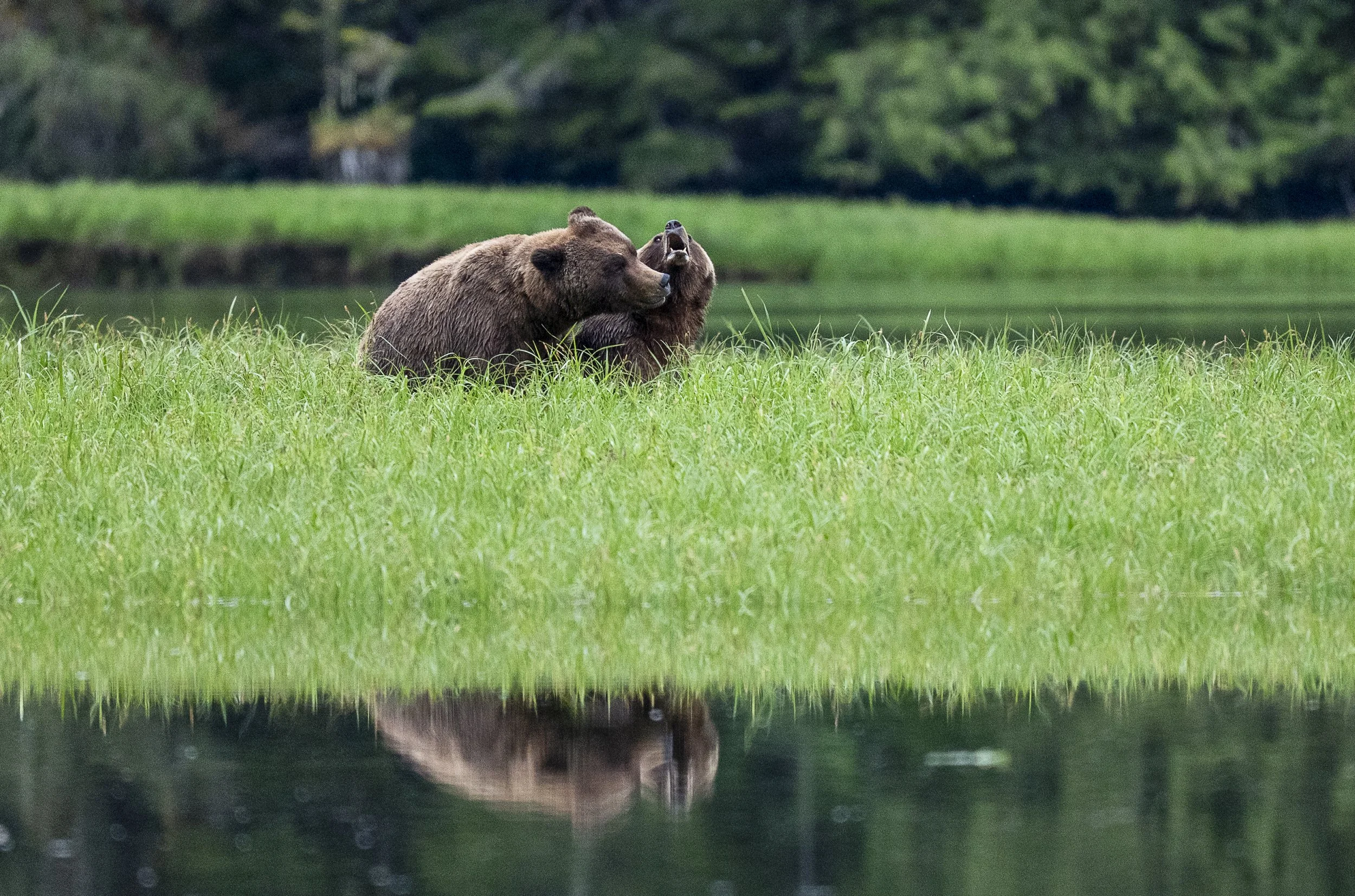
While feeding dominates spring behaviour, it’s not the only thing happening. Spring is also the start of bear mating season, which adds an entirely different layer of complexity to estuary life.
Male bears begin roaming widely, covering large distances in search of receptive females. This movement increases bear density in productive areas like estuaries and creates frequent, dynamic interactions.
At the same time:
Mothers with cubs are highly alert, keeping close watch on their surroundings
Cub safety becomes paramount, as adult males can pose a threat
Solo bears appear and disappear, moving through estuaries with purpose
The result is a constantly shifting landscape of behaviours. Feeding, posturing, avoidance, curiosity, and occasional tension.
Mothers, Cubs, and Caution
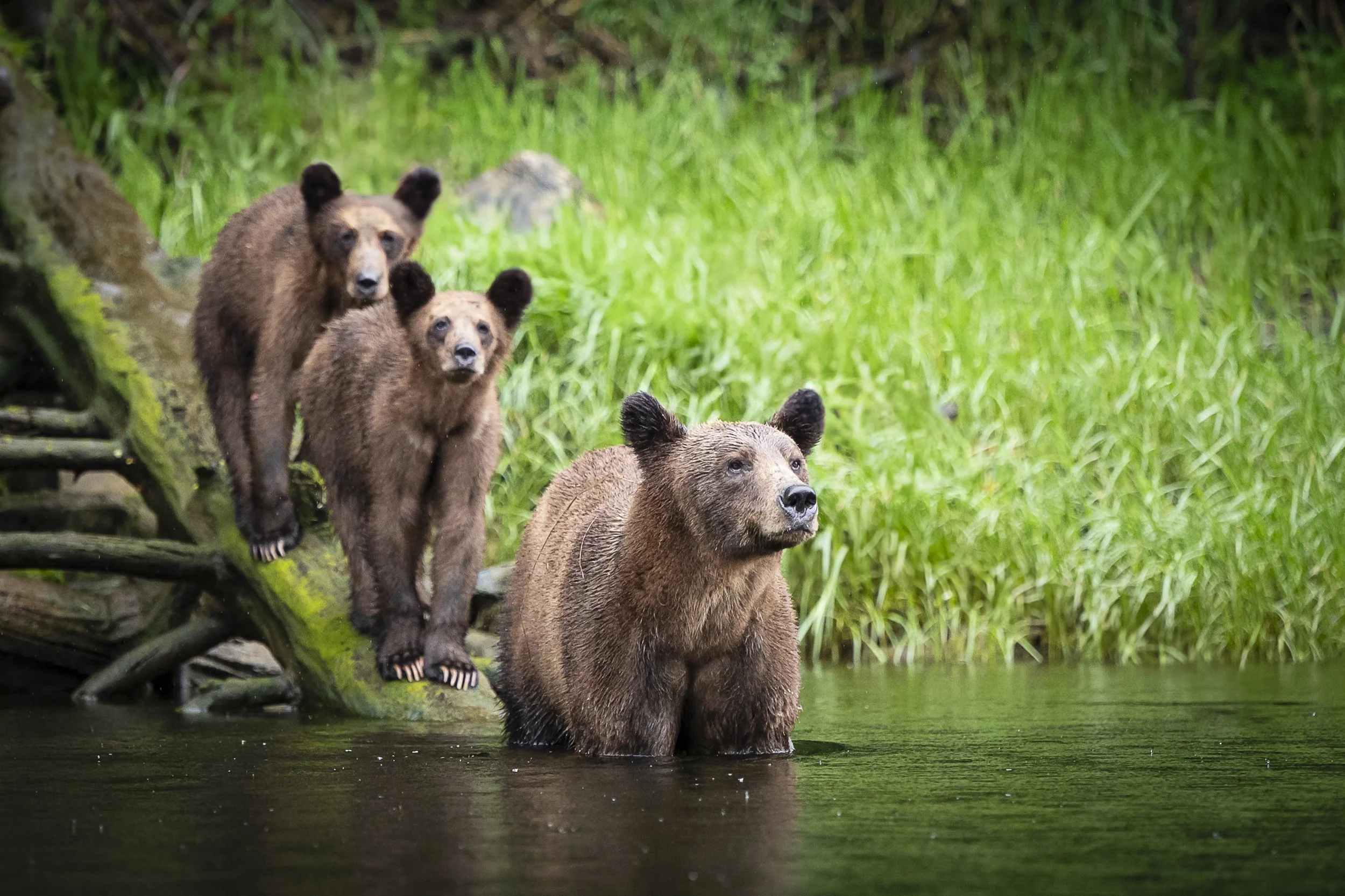
For females with cubs, spring is a delicate balance. Estuaries provide essential food, but they are also social spaces where encounters are more likely. Mothers often position themselves strategically, keeping cubs close and choosing feeding areas with good visibility and escape routes.
Cubs, meanwhile, are learning everything for the first time:
How to graze
How to respond to other bears
How to move through open spaces
These moments offer powerful insight into bear development and family dynamics.
Why Spring Is Such a Compelling Time to Visit
Spring estuaries are full of motion and meaning. Bears are not just present, they are active, responding to rapid seasonal change.
Spring offers:
High bear visibility due to concentrated feeding
A mix of solitary bears, mothers with cubs, and roaming males
Behaviour shaped by hunger, mating, and survival all at once
It’s a season that tells a complete story, of endurance, renewal, and the complex social lives of bears emerging from winter.
Spending time in a spring estuary is about more than observation. It’s about understanding how tightly bears are tied to these ecosystems, and why protecting places like estuaries is essential to their survival.