
What Makes the Khutzeymateen Unique? Inside Canada’s First Grizzly Bear Sanctuary
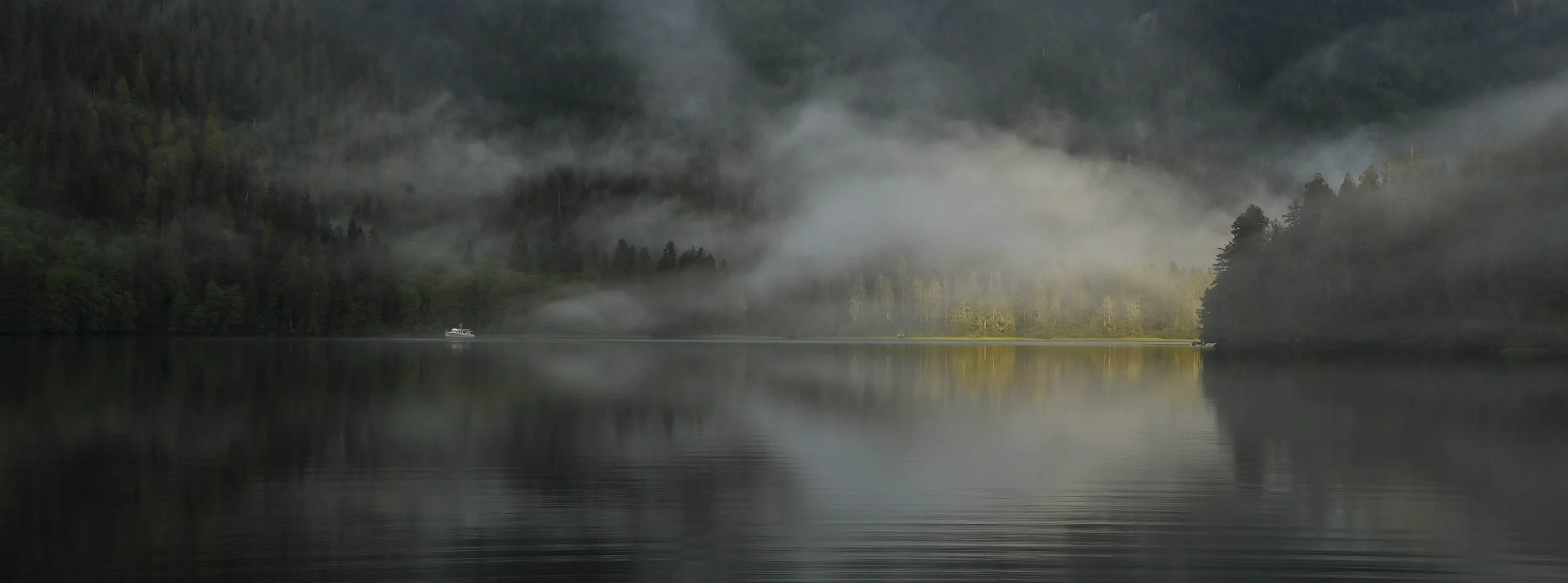
When you enter the Khutzeymateen, the first thing you notice isn’t the bears — it’s the silence. The rainforest breathes around you. Ancient cedar and spruce stand like guardians over calm inlets. Mist threads through the valley like memory. In the fall, salmon-rich streams pulse through the land like arteries, carrying nutrients that feed trees, wolves, ravens and ultimately, the bears themselves.
This is one of the last intact temperate rainforests left on Earth. A place where the ecosystem still functions the way it was meant to. Where bears live by tides, salmon, and seasons and we are simply visitors in their world.
A Sanctuary Built for Bears
Established in 1994, the Khutzeymateen was designated as Canada’s first grizzly bear sanctuary, protecting more than 44,000 hectares of critical habitat. No logging. No roads. No trophy hunting. Just wild coast and wild bears.
Grizzlies here thrive because they have what bears elsewhere have lost:
Healthy salmon runs that fuel them through the year
Productive estuaries full of sedges, roots, and mussels
Minimal human intrusion, keeping stress low and behaviour natural
Secure denning habitat, where sows can raise cubs in peace
A female grizzly can raise her young without the constant pressure of development or disturbance. In a world where habitat loss is the norm, the Khutzeymateen stands as a rare success story.
How We Experience the Estuary
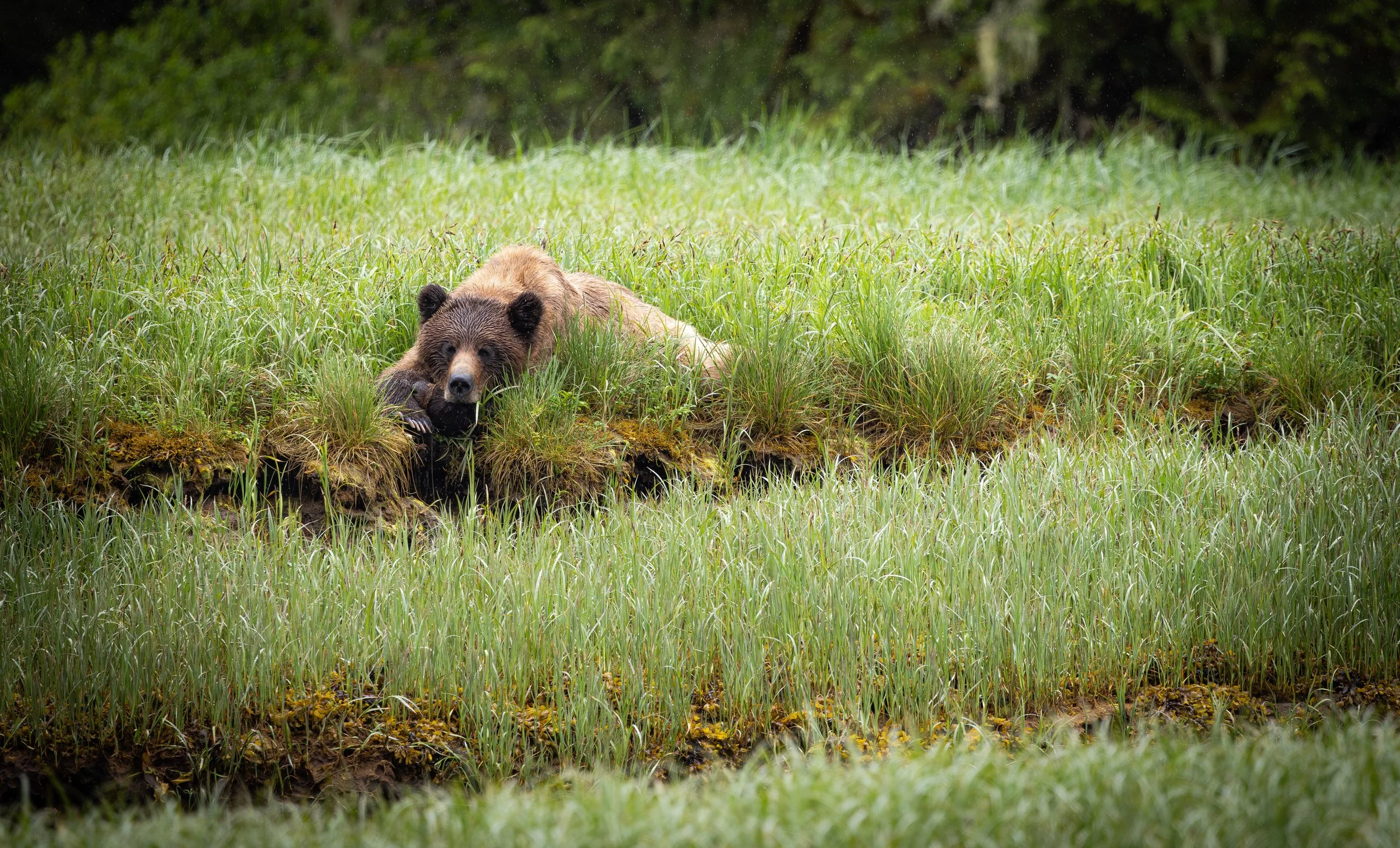
The estuary is the heart of this place. Where tides meet meadow, where bears feed, forage, and live out their daily lives. Our goal is to witness it respectfully, without imprinting on it.
We are one of only two Zodiacs are permitted inside at a time, allowing us to experience the bears without crowding or stress. From a Zodiac, we’re quietly on the water, close enough for remarkable encounters, yet always maintaining a safe and respectful distance. We can get low, eye-level with feeding bears, creating dynamic photographic angles that simply aren’t possible from land or large vessels.
Because tides shape movement here, we don’t visit just once, we return again and again. Multiple sessions in the estuary and inlet allow us to observe different behaviours under changing conditions. High water might bring bears swimming between sedge meadows, while low tide reveals clam beds and grazing opportunities. Each tide tells a new story.
What Guests Often Experience
A mother teaching her cub how to flip rocks for crabs. A large boar framed against dripping coastline, kelp hanging from his claws. The sounds of of a bear grazing on sedge only metres away, relaxed, unconcerned, aware but unbothered by our presence. Eagles scream overhead. Ravens chatter in the treeline. The estuary glows with morning or evening light, soft and cinematic.
In the Khutzeymateen, moments don’t feel manufactured. They feel earned, by respecting space, by reading the tide, by slowing down enough to let the landscape reveal itself.
Why This Place Matters
The Khutzeymateen isn’t just a destination. It’s a mirror of what wilderness used to be — a glimpse into a world where bears rule the tide line, salmon feed the forest, and humans have learned to step lightly.
To experience this place is to remember what’s worth protecting.
If you’d like to witness this unique ecosystem and photograph it with intention, we’d love to share it with you.