
Why is Churchill the Polar Bear Capital of the World?
A place where sea ice returns first — and bears know it.
Each fall, we gather in Churchill — a place often referred to as the polar bear capital of the world. For photographers, it’s one of the most extraordinary wildlife experiences on Earth. Nowhere else consistently offers the same density of bears, the variety of behaviours, or the intimate window into their lives as they wait for winter to return.
But this raises the obvious question:
Why Churchill?
Why here — and not somewhere else — do polar bears gather in such astonishing numbers?
The answer is rooted in both geography and survival strategy.
1. Polar bears are marine mammals — and the ocean is their lifeline
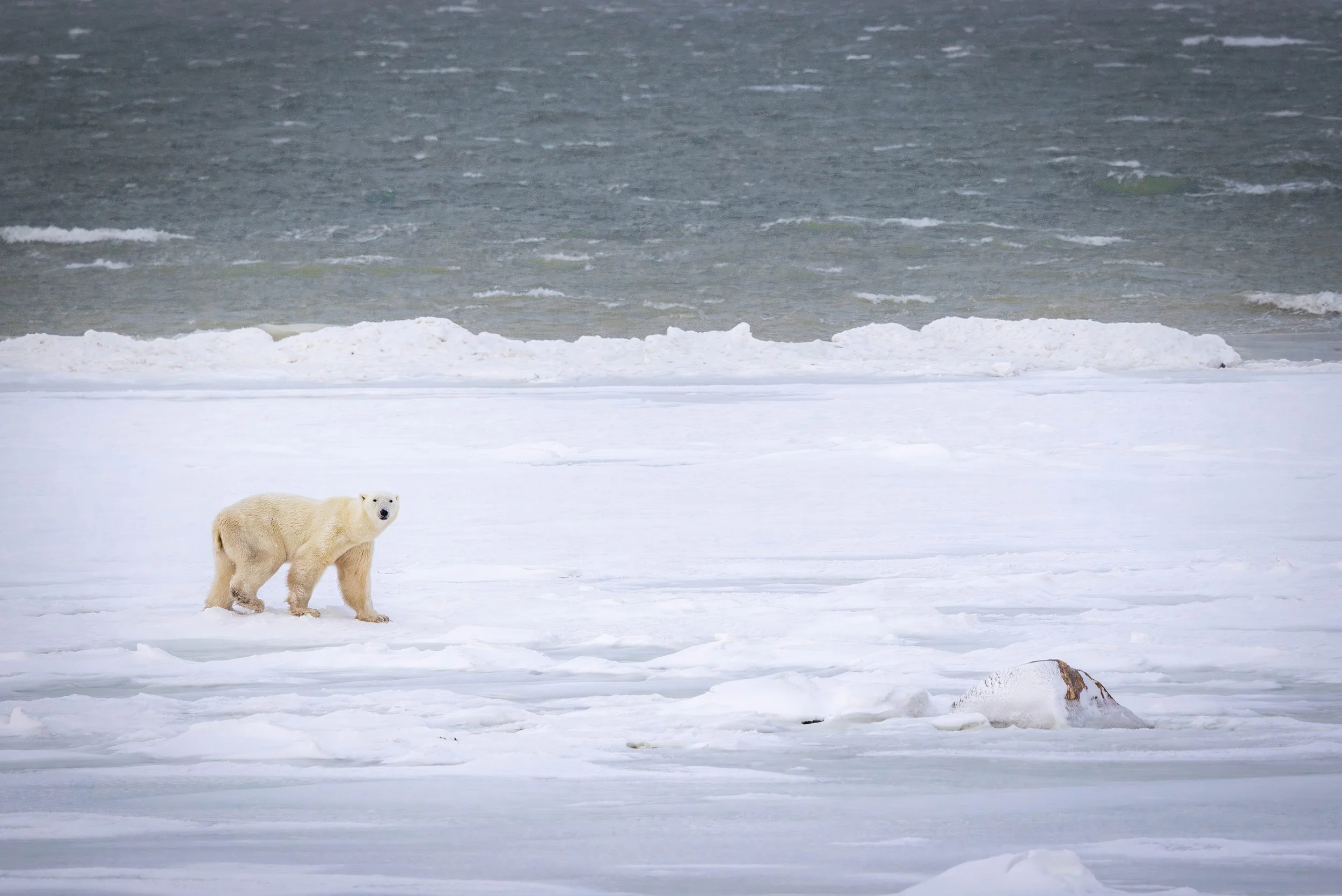
Though they walk on land, polar bears do not rely on it. They are marine mammals, animals of the ice, built for a life spent hunting on the surface of a frozen sea. Their primary prey (ringed and bearded seals) are almost entirely inaccessible without sea ice to use as a platform. Ice is their hunting ground, their home range, the foundation of their existence.
No sea ice → no seals.
No seals → no energy to survive the year.
Which brings us to the second piece of the puzzle — and the reason Churchill is so critical.
2. Churchill forms sea ice first — and the bears know it
Churchill sits at the meeting point of Hudson Bay and the Churchill River, at a biological and oceanographic crossroads. Here’s what makes this small northern community so extraordinary:
Hudson Bay is a saltwater system, which means it takes longer to freeze, while the Churchill River delivers freshwater that solidifies much more quickly and at a higher temperature. As autumn temperatures drop, ice first forms in the river and begins to spread outward into the bay. At the same time, prevailing northwest winds and ocean currents push existing ice south from further up the coast, adding to the build-up. The combined effect is powerful: year after year, the coastline around Churchill is the first place on Hudson Bay to freeze.
For a bear that has been fasting on land for months, this is gold.
Sea ice here is like the season’s first open grocery store and every bear within hundreds of kilometers knows it. As freeze-up approaches, they gravitate to this coastline, waiting for that first bridge of ice to form beneath their paws.
This is why Churchill is unmatched.
What this means for photographers
Churchill isn’t just a place of bears — it’s a place of anticipation. For photographers, this combination is magic:
📸 Bears are highly active as they patrol, test, and search for the forming ice.
📸 Low-angle winter light paints the landscape in soft gold and blue.
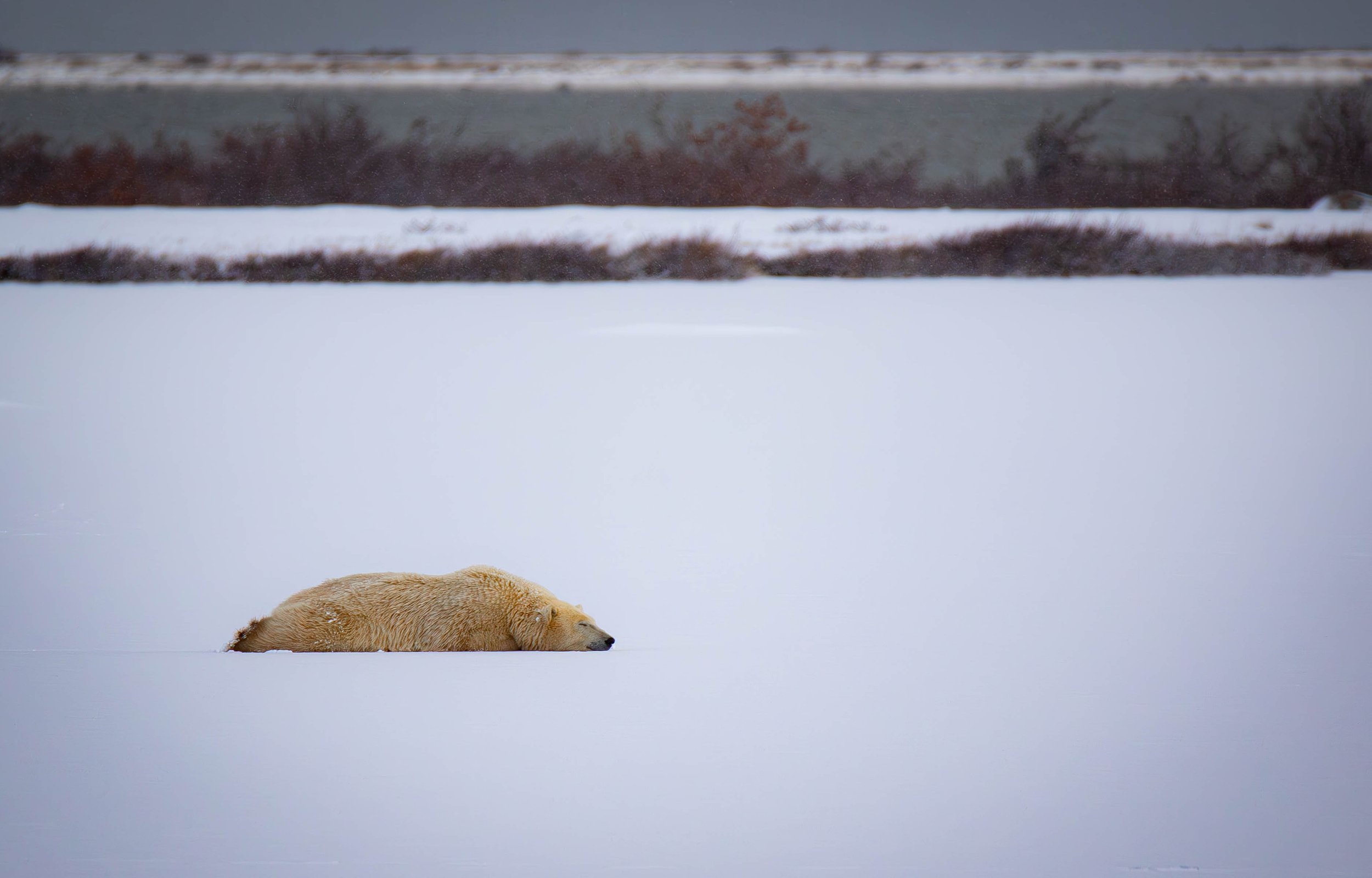
📸 Snowfall adds atmosphere, a canvas for contrast, movement, and mood.
📸 Interactions increase — sparring males, curious subadults, mothers with cubs.
📸 The story is visible: hunger, patience, instinct, ice.
You’re not only photographing animals, you’re photographing the moment before a transformation. The days before the sea freezes are charged with tension and energy. Every frame holds narrative weight.
Why we return year after year
Witnessing this gathering is witnessing ecology in motion. Churchill offers not just proximity, but context. The annual reunion of bears and ice, a ritual older than memory. For those who stand here with a camera in hand, it is more than photography. It is witnessing an ecosystem breathe, shift, and ignite with life.
Churchill is the polar bear capital of the world for one reason:
The bears are not here for us — we are here because the ice returns here first. And every year, they come home to meet it.