
Photography Tips for Grizzly Bears in the Khutzeymateen
Photographing grizzly bears in the Khutzeymateen is a rare privilege. As Canada’s first grizzly bear sanctuary, this remote corner of the Great Bear Rainforest is protected, quiet, and profoundly wild. Access is limited, bears are free to behave naturally, and every encounter feels earned rather than staged. Creating strong photographs here requires more than luck, it requires preparation, patience, and an understanding of both photography and bear behaviour.
Before the Trip: Set Yourself Up for Success
There are three essential requirements before arriving in the Khutzeymateen:
Appropriate gear — Preparation begins long before you step into a Zodiac. A weather-sealed camera body and a telephoto lens in the 100–400mm or 200–600mm range are essential for photographing bears safely while maintaining respectful distances.
Rain and cold readiness — The Great Bear Rainforest is wet and cool year-round, so waterproof clothing and dry protection for camera equipment are necessary.
Technical familiarity — Equally important is technical readiness. Bears move unpredictably, often emerging suddenly from forest edges or shifting direction while feeding. Being comfortable adjusting shutter speed, ISO, and autofocus modes without hesitation allows you to stay present in the moment rather than fumbling with settings. If you aren’t there yet, your photography guide will help you with settings in these changing conditions.

In the Field: Photographing in the Estuary
Once in the Khutzeymateen, the estuary becomes the classroom. zodiacs allow us to remain low on the water, creating intimate perspectives while always maintaining safe distances from the bears. We are one of only two zodiacs are permitted in the estuary at a time, ensuring minimal disturbance and a quiet, respectful experience.
Camera Settings - Light in the Great Bear Rainforest is often soft and low, misty mornings, overcast skies, and shaded forest edges are common. To manage these conditions, prioritize a wider aperture, don’t be afraid to raise your ISO, and use faster shutter speeds than you might expect. Motion from feeding bears, moving water, or shifting boats, demands these advance camera settings. Continuous autofocus and burst mode help capture fleeting expressions and interactions.
Tide awareness - Tides dictate everything. Grizzlies time their feeding with the ebb and flow, moving through sedge meadows and mudflats as food becomes available. Being in the right place at the right tide is critical.
Low-impact positioning - Zodiacs allow us to stay low for compelling angles while maintaining safe, respectful distances from bears at all times.
Behavioural reading - Understanding bear body language helps anticipate movement, interactions, and moments worth waiting for.
This is where traveling with a photography guide becomes invaluable. A guide interprets behaviour, positions boats for light and background, and helps you build images that show context, scale, and story, not just the bear. We schedule multiple sessions in both the estuary and inlet, intentionally planned around tide cycles to maximize bear activity and photographic opportunity.
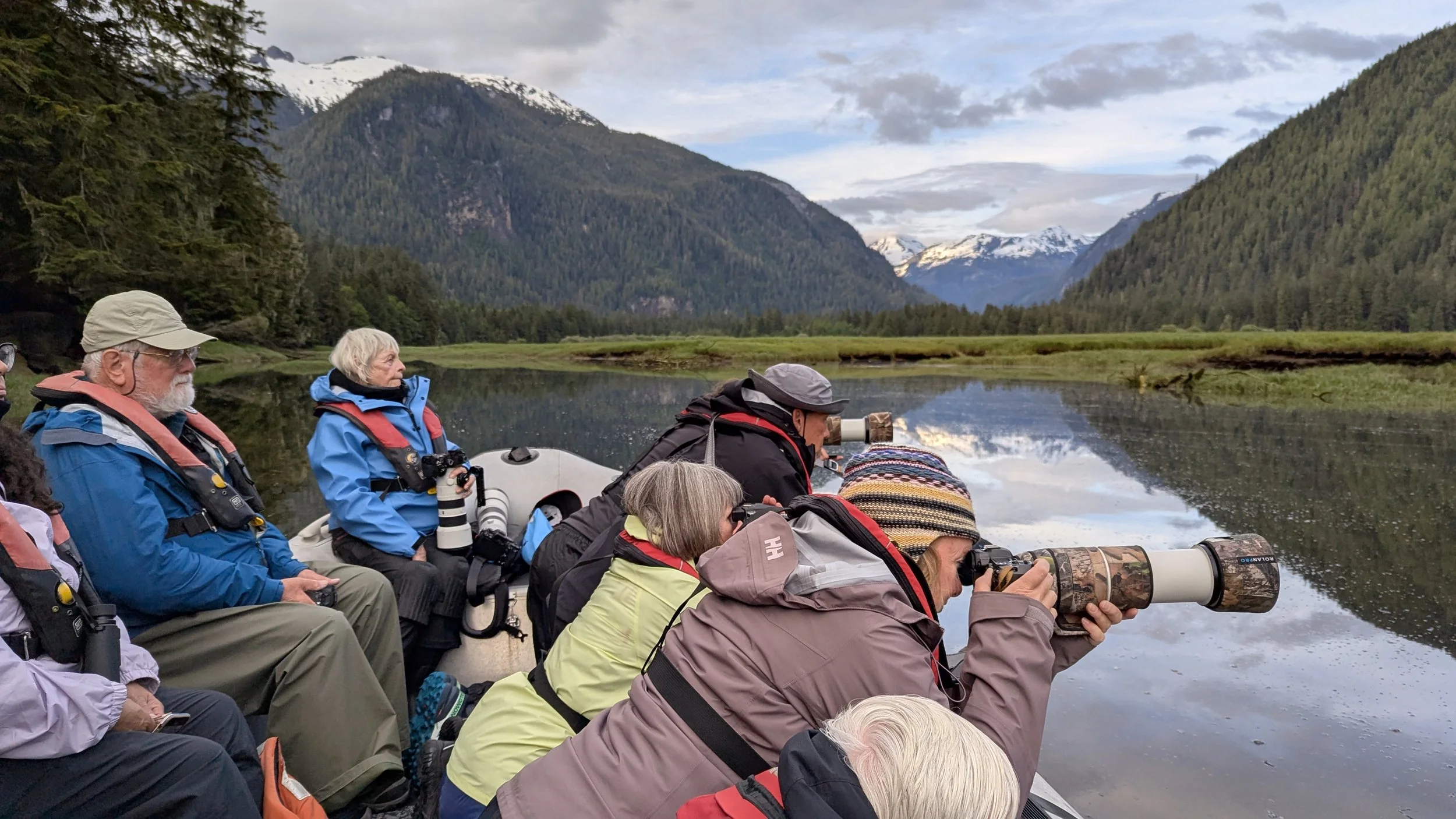
Photo Editing: Completing the Story
The work of storytelling doesn’t end when you leave the estuary. In many ways, it begins once you’re on your computer, reviewing your images with fresh eyes. Editing should enhance the mood of the rainforest rather than overpower it. This is a landscape defined by softness, mist, muted greens, reflective water, and your processing choices should honour that atmosphere.
Keep contrast and saturation restrained. Overly bold colours can strip the images of their sense of place. Instead, focus on gentle contrast adjustments and natural colour balance to maintain the quiet strength of the estuary.
Slightly lift shadows while protecting highlights can help retain detail in darker fur without flattening the image.
When cropping, resist the urge to go too tight. Leaving space around the bear often reinforces scale, habitat, and the feeling of wilderness.
Edit one image fully, then sync carefully. This maintains consistency while allowing for small, image-specific refinements.
Step away before final export. Returning later with fresh eyes often reveals over-processing you didn’t notice initially.
Image selection is just as important as editing technique. The strongest stories are rarely built from single, dramatic frames alone. Look for sequences that show behaviour: a bear entering the estuary, feeding with the tide, pausing to scan the shoreline, or interacting with another bear. These images together tell a richer story about coexistence, timing, and place than any isolated portrait could.
Guidance during the editing process is invaluable. A photography guide can help you identify which images communicate behaviour most clearly, which edits feel authentic, and which choices may unintentionally distract from the story
Ready for an Adventure?
In the Khutzeymateen, great photography isn’t rushed. It’s built through respect, knowledge, and time, both in the field and behind the screen. Traveling with a photography guide ensures not only stronger images, but a deeper understanding of one of the most intact grizzly bear habitats left on Earth, long after the trip itself has ended.