
The Shoebill Search: Patience, Photography, and Prehistoric Birds
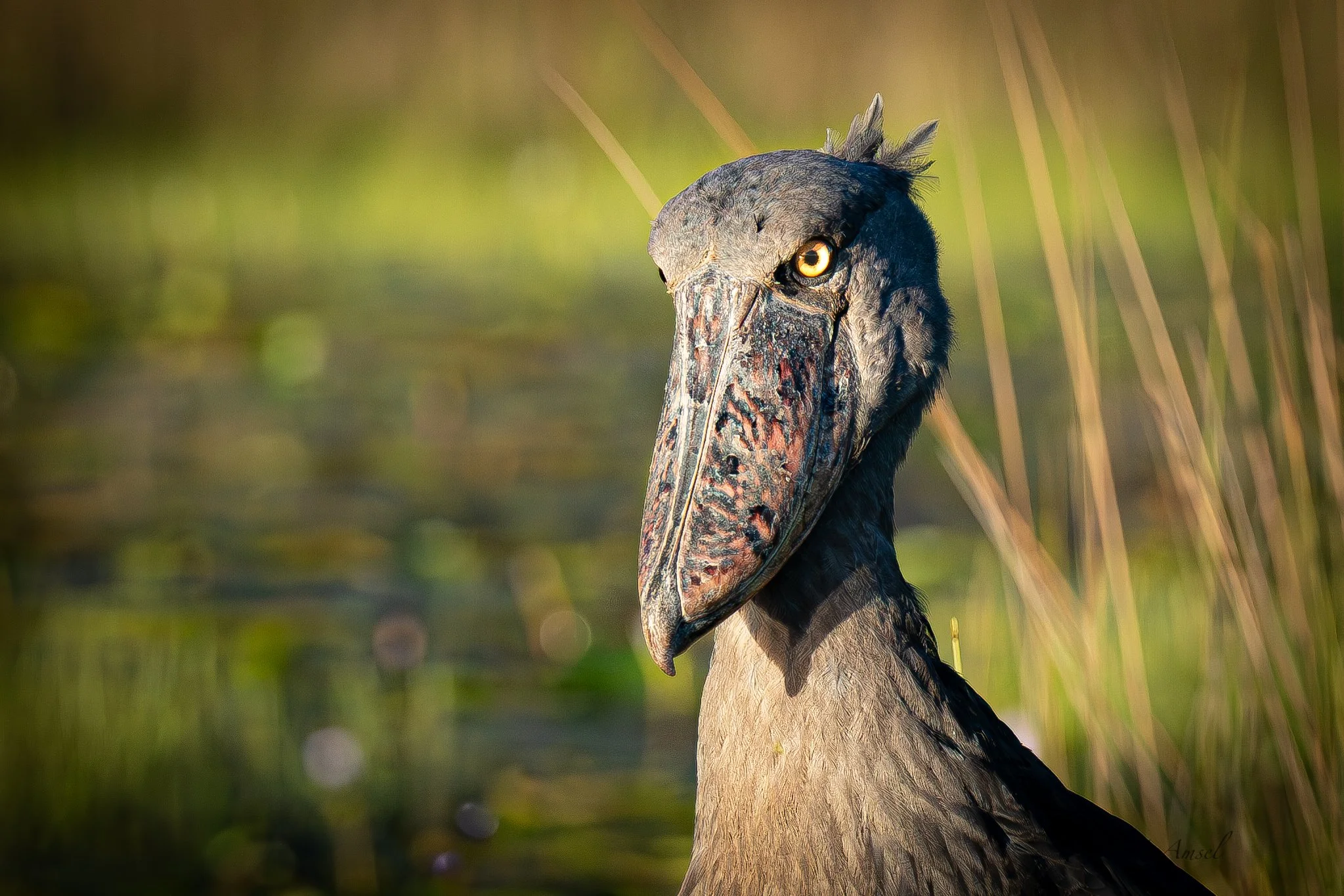
Few birds capture the imagination quite like the shoebill. Standing over four feet tall, with piercing eyes and an enormous shoe-shaped bill that gives the species its name, the shoebill looks less like a modern bird and more like something that stepped out of prehistory.
For many wildlife photographers and bird enthusiasts, seeing a shoebill is one of Africa's great wildlife experiences. Unlike many iconic African animals that roam open savannas, shoebills inhabit vast swamps and wetlands, hidden among papyrus reeds and floating vegetation. Finding one requires patience, persistence, and a willingness to embrace the adventure of the search.
Meet the Shoebill
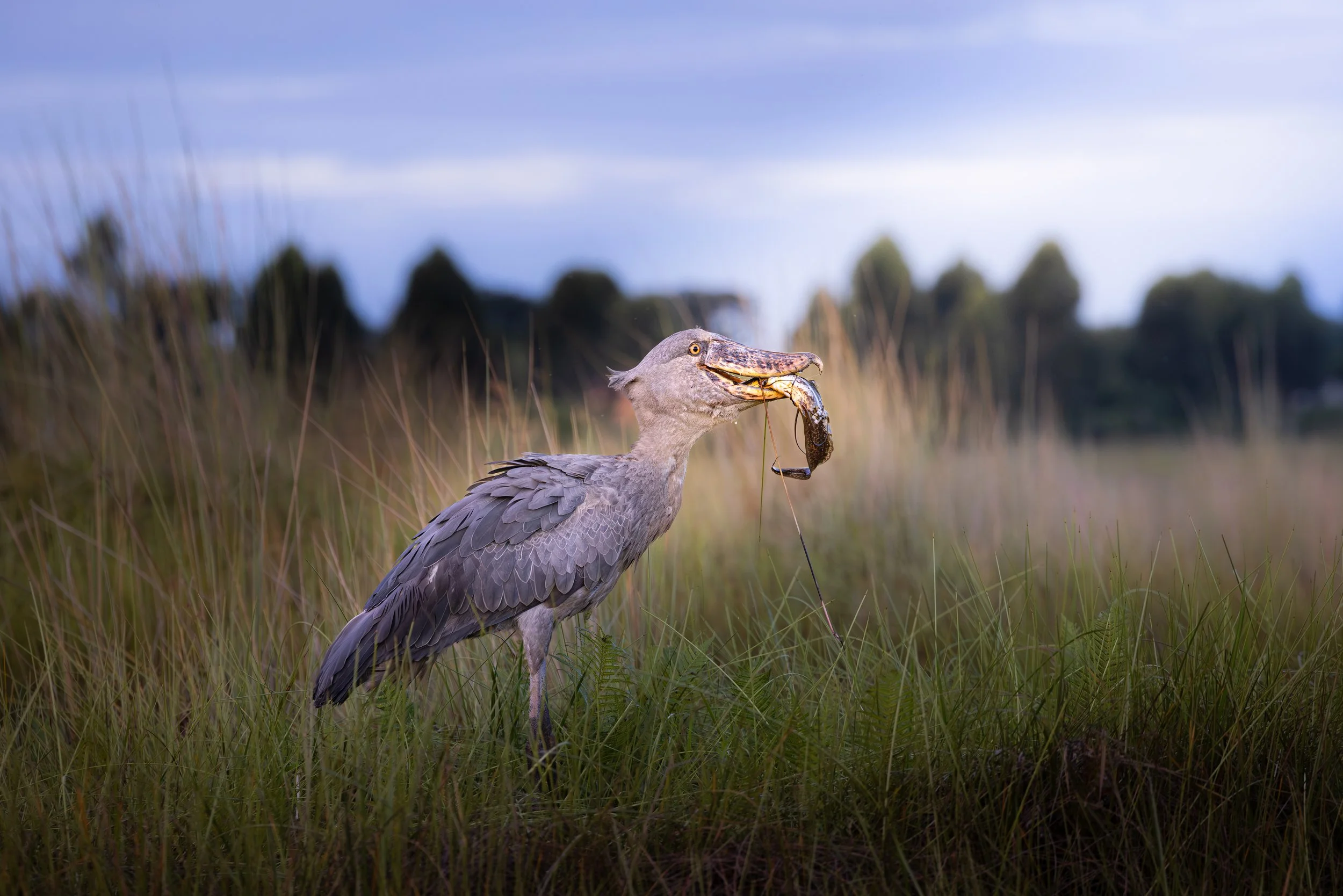
The shoebill is one of the most distinctive birds on the planet. Its massive bill can exceed 20 centimetres in length and is perfectly adapted for hunting large prey. While fish make up the majority of their diet, shoebills are opportunistic predators and have been known to catch lungfish, catfish, frogs, water snakes, and even small reptiles.
Their hunting strategy is surprisingly simple: stand completely still and wait.
A shoebill may remain motionless for extended periods, appearing almost statue-like as it watches the water below. Then, in an instant, it strikes with incredible speed and precision, using its powerful bill to grab unsuspecting prey. Their slow, deliberate movements and patient nature make them masters of the swamp.
These birds are typically solitary and spend much of their lives hidden within extensive wetland systems. Their preference for remote habitat is one reason they remain such a sought-after sighting.
Into the Swamp
The search for a shoebill often begins before sunrise.
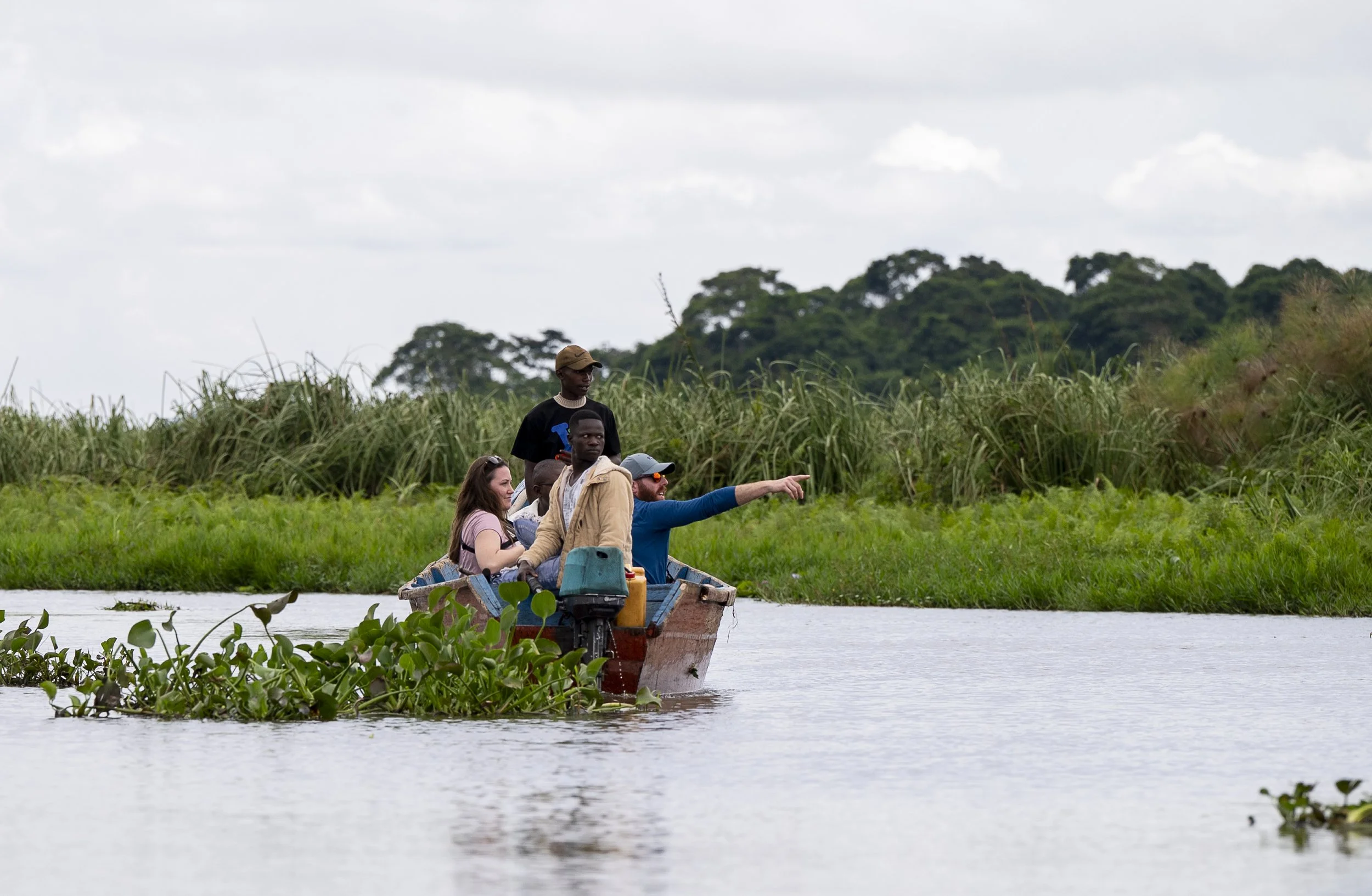
As the first hints of light appear on the horizon, guides quietly launch canoes into the calm waters of Uganda's wetlands. The early morning air is cool and still, and the water reflects the colours of dawn as you begin weaving through narrow channels surrounded by towering papyrus.
The excitement builds quickly.
Every bend in the channel presents possibility. Every distant shape standing above the reeds causes cameras to rise in anticipation. Could that be it?
Of course, the beauty of these excursions is that the search itself becomes part of the experience.
The wetlands are alive with birds. African jacanas delicately walk across floating vegetation. Herons stalk the shallows. Kingfishers flash brilliant colours as they dart across the water. Weaverbirds chatter from the reeds while fish eagles call overhead.
Even when the shoebill remains hidden, there is always something to see.
The Moment You've Been Waiting For
Then suddenly, there it is.
At first, it may appear as little more than a grey silhouette standing above the vegetation. As the canoe drifts closer, details begin to emerge. The enormous bill. The shaggy crest feathers. The intense stare.
The first impression is often the same for everyone: it doesn't look real.
The shoebill's appearance feels ancient. It is easy to imagine this bird standing among prehistoric landscapes millions of years ago. Its deliberate movements only add to that impression. Every step seems measured and purposeful. Every glance feels calculating.
For photographers, it is an extraordinary subject. The soft morning light illuminates the intricate feather detail while the surrounding papyrus provides a sense of place. Yet many people quickly discover that the best part of the encounter is simply watching.
There is something captivating about observing an animal so perfectly adapted to its environment.
A Lesson in Patience
As the encounter continues, the shoebill may slowly begin moving through the swamp, carefully navigating channels and patches of vegetation as it searches for prey.
There is no rush.
The bird moves at its own pace, and those who remain patient are often rewarded with unforgettable moments. A hunting strike. A slow wing stretch. A deliberate walk through golden light reflecting off the wetland.
In many ways, searching for shoebills is exactly what makes wildlife experiences so meaningful. The anticipation, the uncertainty, and the patience required all make the eventual sighting that much more rewarding.
Whether you're a dedicated birder, an avid photographer, or simply someone who loves unique wildlife experiences, few encounters compare to seeing a shoebill in its natural habitat. The combination of peaceful wetland landscapes, incredible birdlife, and the anticipation of finding one of Africa's most iconic species makes every excursion memorable.
At wildsight expeditions, our Uganda journeys offer the opportunity to explore these remarkable wetlands alongside expert guides, creating unforgettable experiences and exceptional photographic opportunities in one of the best places on Earth to search for shoebills.