
Voices of the Coast: Orcas of the Great Bear Rainforest
Few wildlife encounters compare to seeing orcas in the wild, especially along the remote, misty coastline of Great Bear Rainforest. Here, ancient forests meet rich marine ecosystems, creating one of the best places in the world to observe these iconic predators. But beyond their striking dorsal fins and dramatic surfacing, orcas reveal a deeper story, one of communication, culture, and complex social lives.
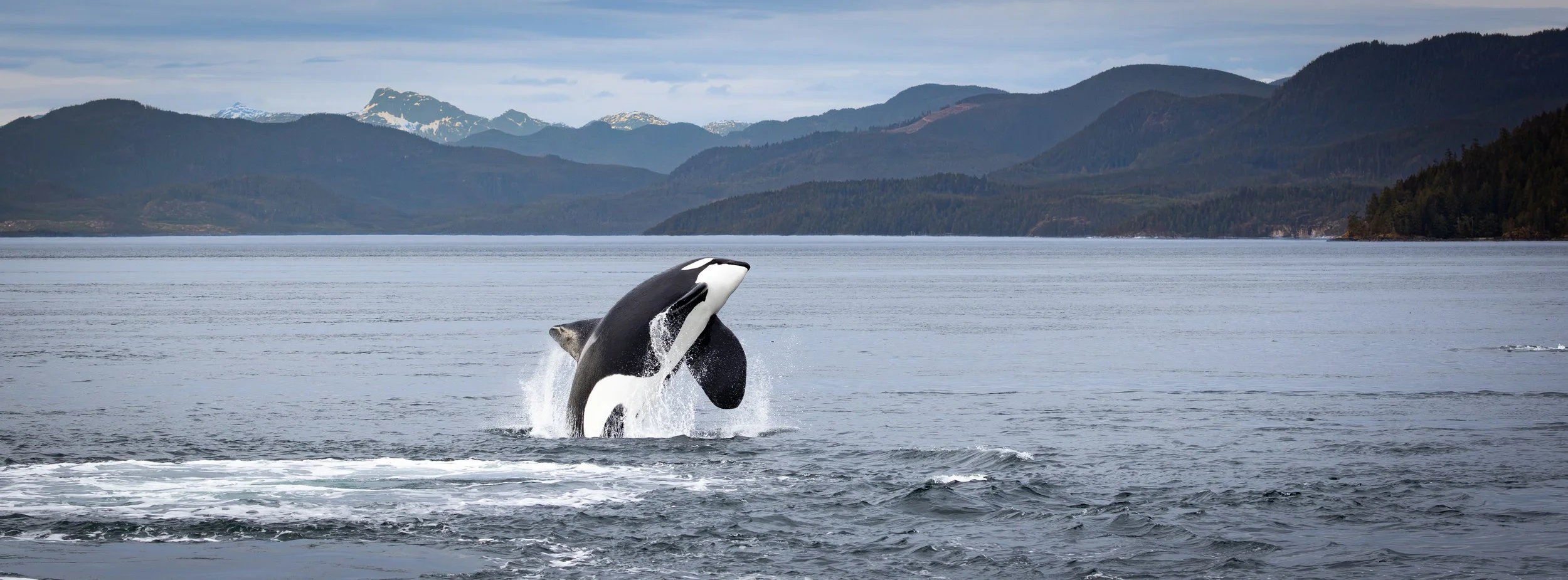
More Than Just Killer Whales
The Orca is one of the most widely distributed mammals on Earth, but along the coast of British Columbia, they exist in distinct populations with very different lifestyles. Broadly, these are divided into resident and transient (Bigg’s) orcas, each with unique behaviors, diets, and even vocal patterns.
Resident orcas are fish specialists, feeding primarily on salmon. They are highly vocal, using a complex system of clicks, whistles, and calls to communicate and coordinate within their pods. These vocalizations are so distinct that each pod has its own “dialect,” passed down through generations.
In contrast, transient orcas hunt marine mammals such as seals and porpoises. Because their prey can hear them, they are far more silent, relying on stealth rather than sound. This difference in feeding strategy has shaped not just how they hunt, but how they interact with each other and their environment.
Family First: The Structure of Orca Pods
Orcas live in tight-knit family groups led by a matriarch. These matrilineal pods are incredibly stable, with individuals often staying with their mothers for life. Knowledge such as migration routes, feeding strategies, and social behaviours, is passed down through these family lines.
In the waters of the Great Bear Rainforest, it’s common to see multiple generations traveling together. Watching a pod surface in unison, exhaling in soft bursts before slipping back beneath the surface, offers a glimpse into this deep familial bond.
These relationships are not just social, they are essential for survival. Younger whales learn where and how to hunt by following older, more experienced members of the group.
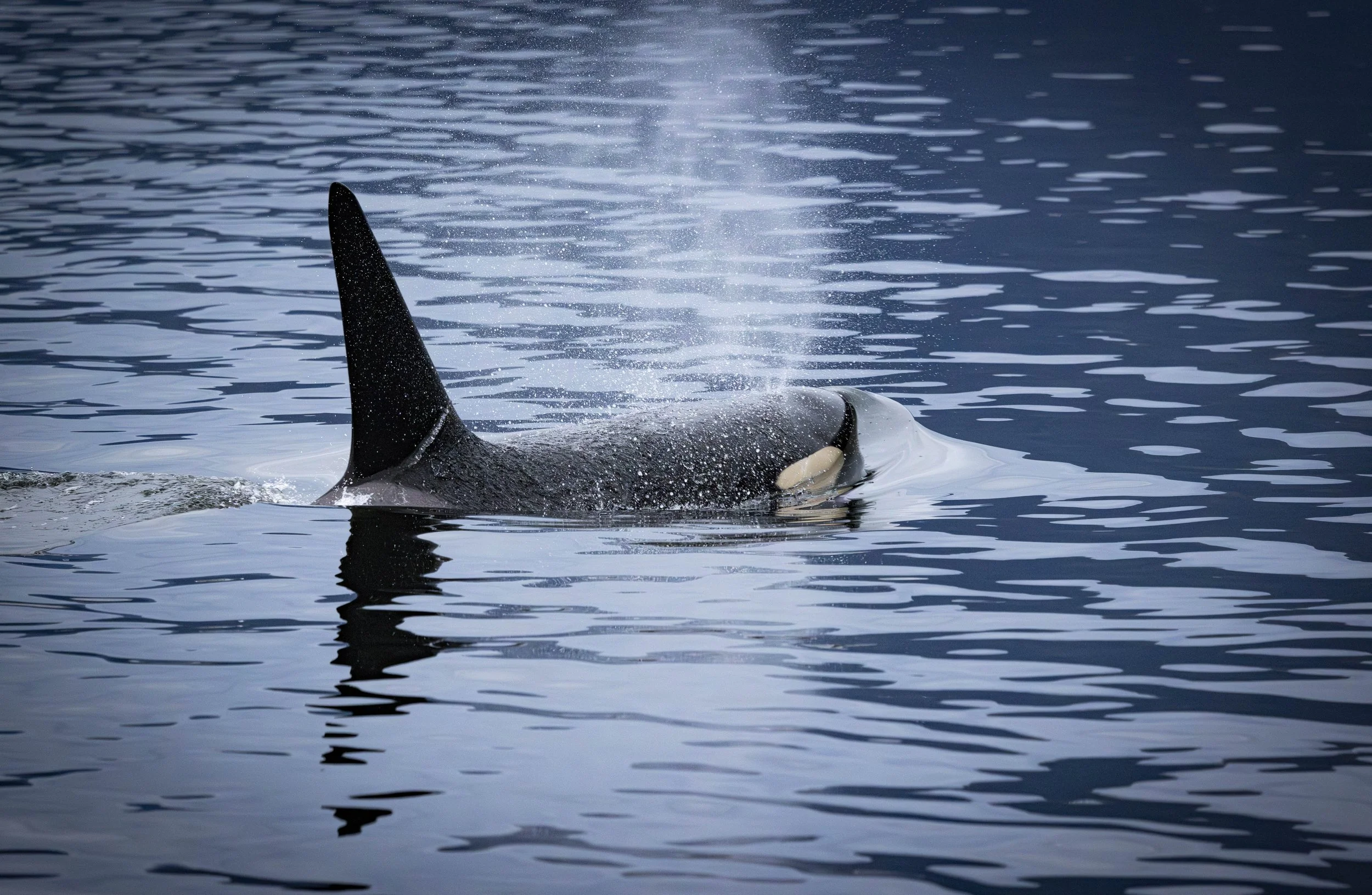
A Language Beneath the Surface
One of the most fascinating aspects of orcas is their communication. Resident pods, in particular, are almost constantly vocalizing. Using echolocation clicks, they navigate and locate prey, while whistles and pulsed calls help maintain group cohesion.
Scientists have identified distinct call patterns unique to specific pods, much like regional accents in human language. This acoustic identity reinforces the idea that orcas are cultural animals, not just biological ones.
For those lucky enough to listen through a hydrophone, the underwater world of orcas is anything but silent, it’s alive with sound, structure, and meaning.
Photographing Orcas in the Wild
Photographing orcas in the Great Bear Rainforest is both thrilling and challenging. The conditions can change quickly, with shifting light, rain, and movement all playing a role.
Success often comes down to preparation and awareness. A few key tips can make a big difference:
Use a telephoto lens (300mm or more) to capture detail while maintaining distance
Keep your shutter speed high to freeze motion during breaches or tail slaps
Watch for patterns. Orca pods often surface in predictable rhythms
Anticipation is everything. Look for subtle cues like a change in direction or increased activity within a pod. Positioning your boat with the light behind you can also help illuminate the whale’s features against the often-dark coastal waters.
And an important note, forgive yourself for missing the shot. Orcas are quick and unpredictable. Make sure you take time to enjoy the moment.
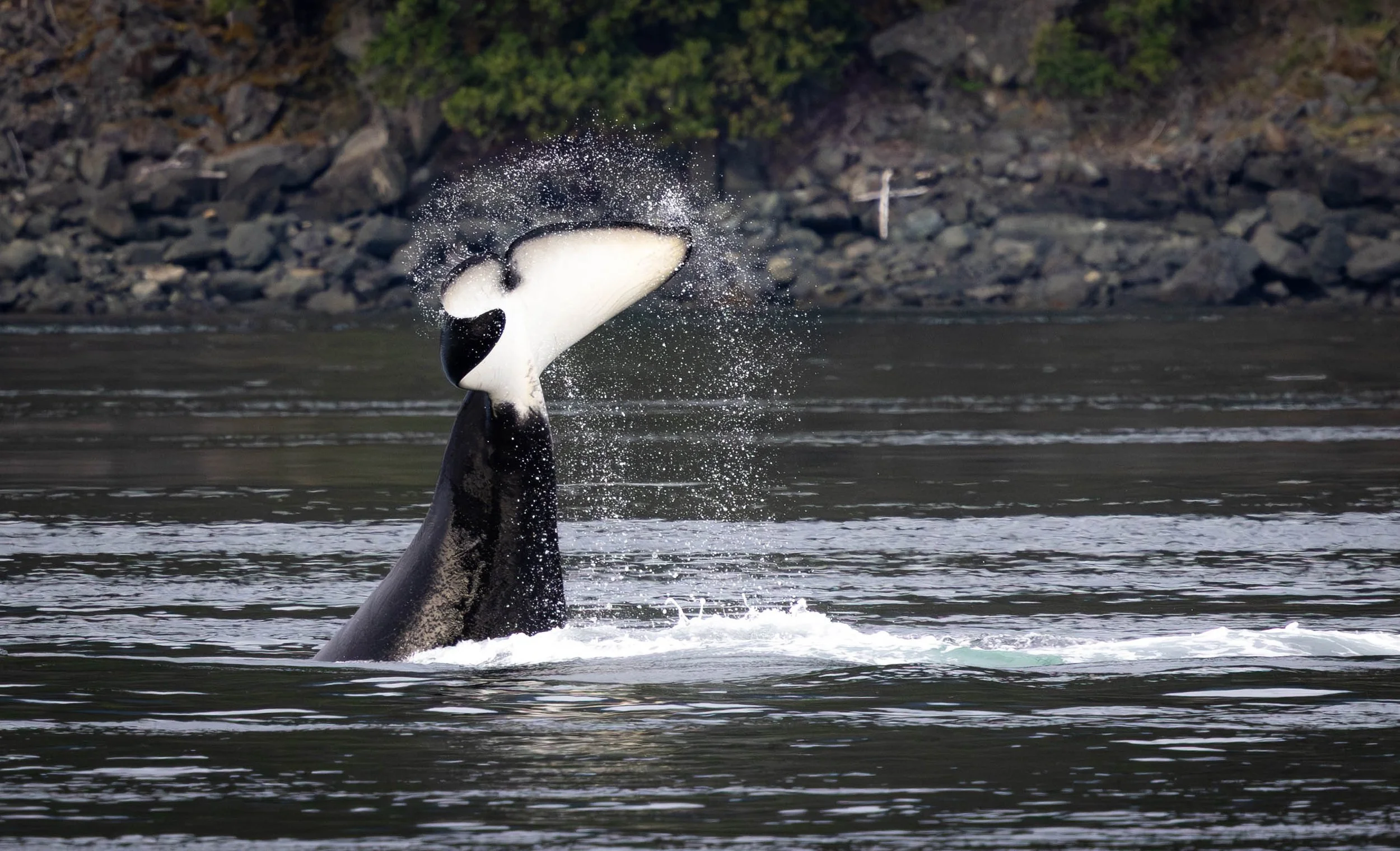
Enjoying the Moment
The orcas of the Great Bear Rainforest are more than just a wildlife sighting, they are a window into a complex and interconnected world. From their distinct cultures and communication styles to their deep family bonds, they challenge the way we think about animal intelligence.
For photographers, capturing these moments is about more than timing, it’s about understanding. The more you learn about their behaviour, the more your images will reflect the story beneath the surface.
Out here, among the towering forests and quiet inlets, the real magic of orcas isn’t just what you see, it’s what you begin to understand.
Join us in the Great Bear Rainforest on our search for bird, bears and whales!