
When the Rivers Feed the Sky: Eagles, Salmon, and the Coastal Rainforest
Winter along the coast of British Columbia is not subtle. Rain falls steadily, rivers swell and spill into their banks, and low clouds cling to towering evergreens. To some, it feels bleak. To wildlife, it signals abundance.
This is when bald eagles arrive in remarkable numbers near Squamish, gathering along river corridors and estuaries as salmon complete their final journey upstream. What unfolds here each winter is one of the clearest examples of how deeply connected land, sea, and sky truly are.
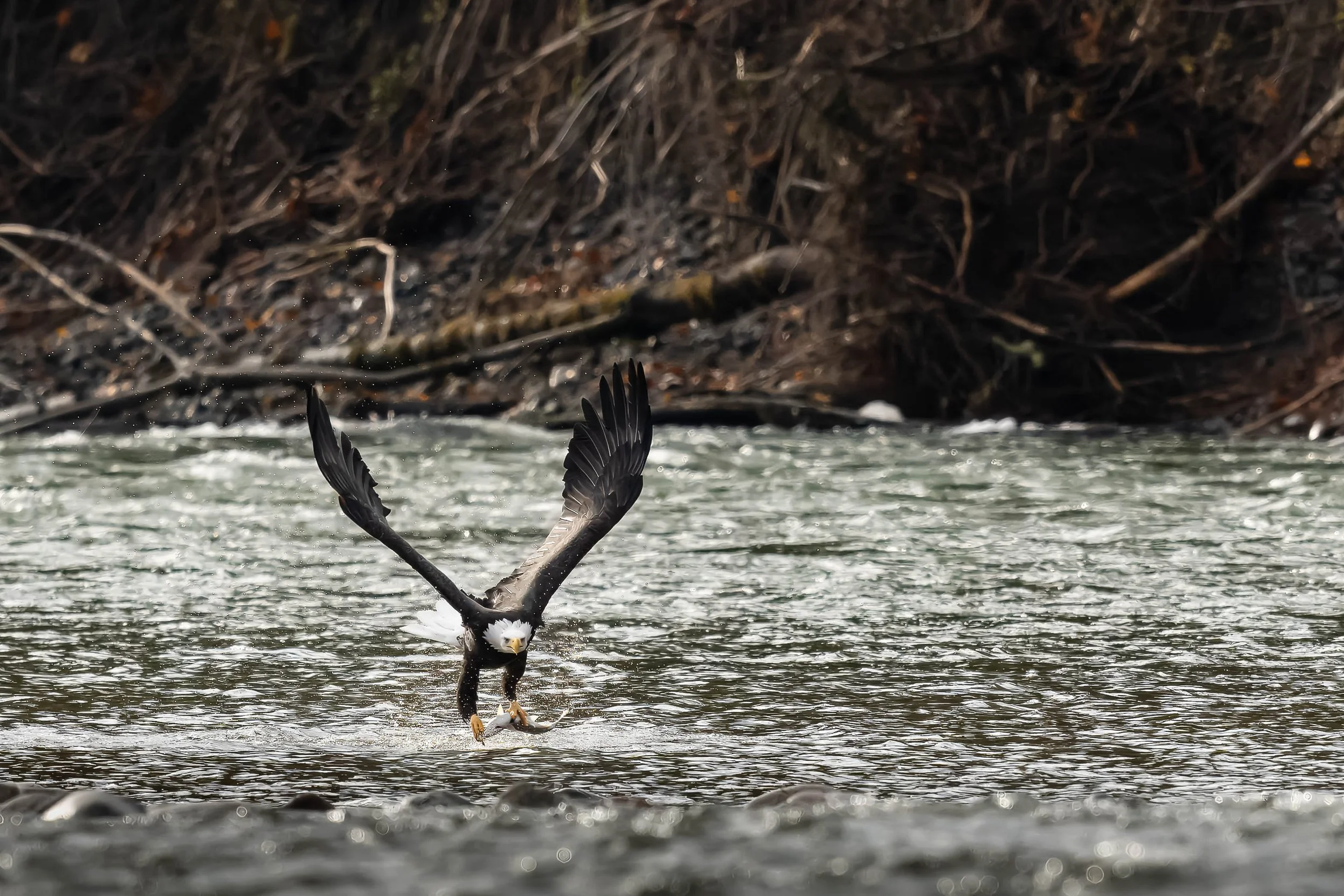
Why Eagles Gather in Winter
Bald eagles are opportunistic hunters and scavengers, and few seasonal events provide as much food as the end of the salmon run. After spawning, Pacific salmon die, their bodies carried downstream or resting along riverbanks. These fish become a vital winter food source, especially when other prey is scarce.
Eagles travel long distances to take advantage of this abundance, congregating in places where salmon runs are strong and accessible. Some remain for weeks, timing their movements to the rhythms of the rivers.
This seasonal concentration is not random, it’s the result of thousands of years of co-evolution between salmon, forests, and wildlife.
Salmon as the Foundation of the Ecosystem
The story doesn’t end with eagles. Dead salmon are one of the most important nutrient sources in the coastal rainforest. Their bodies deliver marine-derived nutrients deep into terrestrial ecosystems, fertilizing forests that would otherwise be nutrient-poor.
Salmon carcasses support:
Eagles, ravens, and other scavenging birds
Bears, wolves, and smaller mammals
Insects and microorganisms that break down nutrients
Trees and plants that absorb nitrogen and phosphorus
Those nutrients move upward—from river to forest canopy—feeding the very trees eagles roost in.
This interconnected system is often called the salmon rainforest, a place where the ocean quite literally sustains the land.
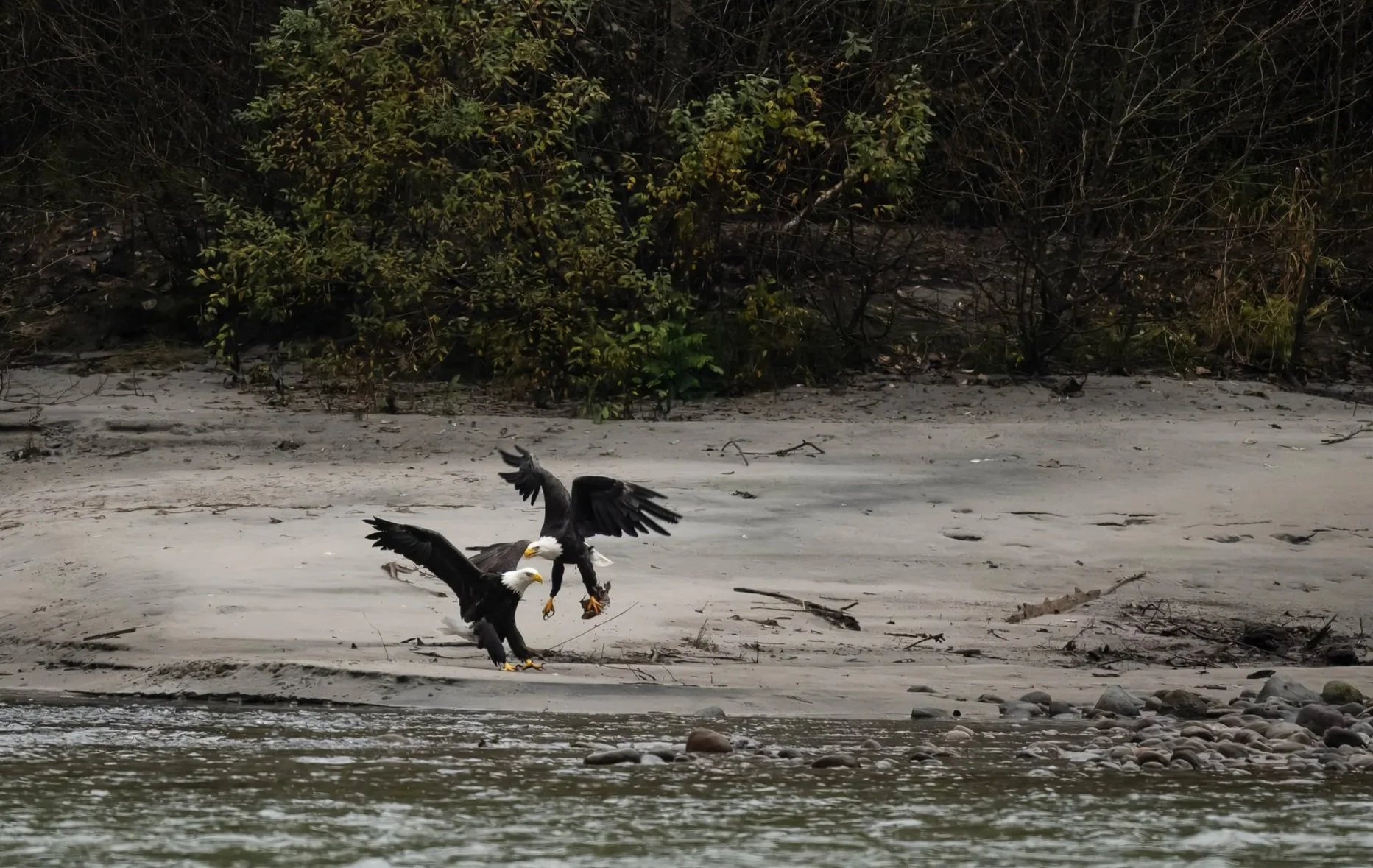
More Than Just Eagles
Standing along these rivers, it becomes clear that eagles are only one piece of a much larger web. Ravens call overhead. Gulls and crows pick along gravel bars. The forest floor is alive with decomposition and regrowth. Even the moss-covered trees benefit from salmon nutrients carried inland by predators and scavengers.
Nothing here exists in isolation. Every life stage of the salmon fuels another.
What It Feels Like to Be There
Winter on the coast demands commitment. It will be wet. It will be cold. Rain soaks through layers, fingers numb, and boots sink into mud along riverbanks. Light filters through cloud and mist, soft and fleeting.
And yet, this is when the rainforest feels most alive.
Eagles perch in towering spruce, drop suddenly to feed, then lift off again with heavy wingbeats. Steam rises from rivers in the cold air. The soundscape is constant, water moving, wings cutting through damp air, distant calls echoing through the forest.
This is not a polished experience. It’s raw, elemental, and deeply immersive.
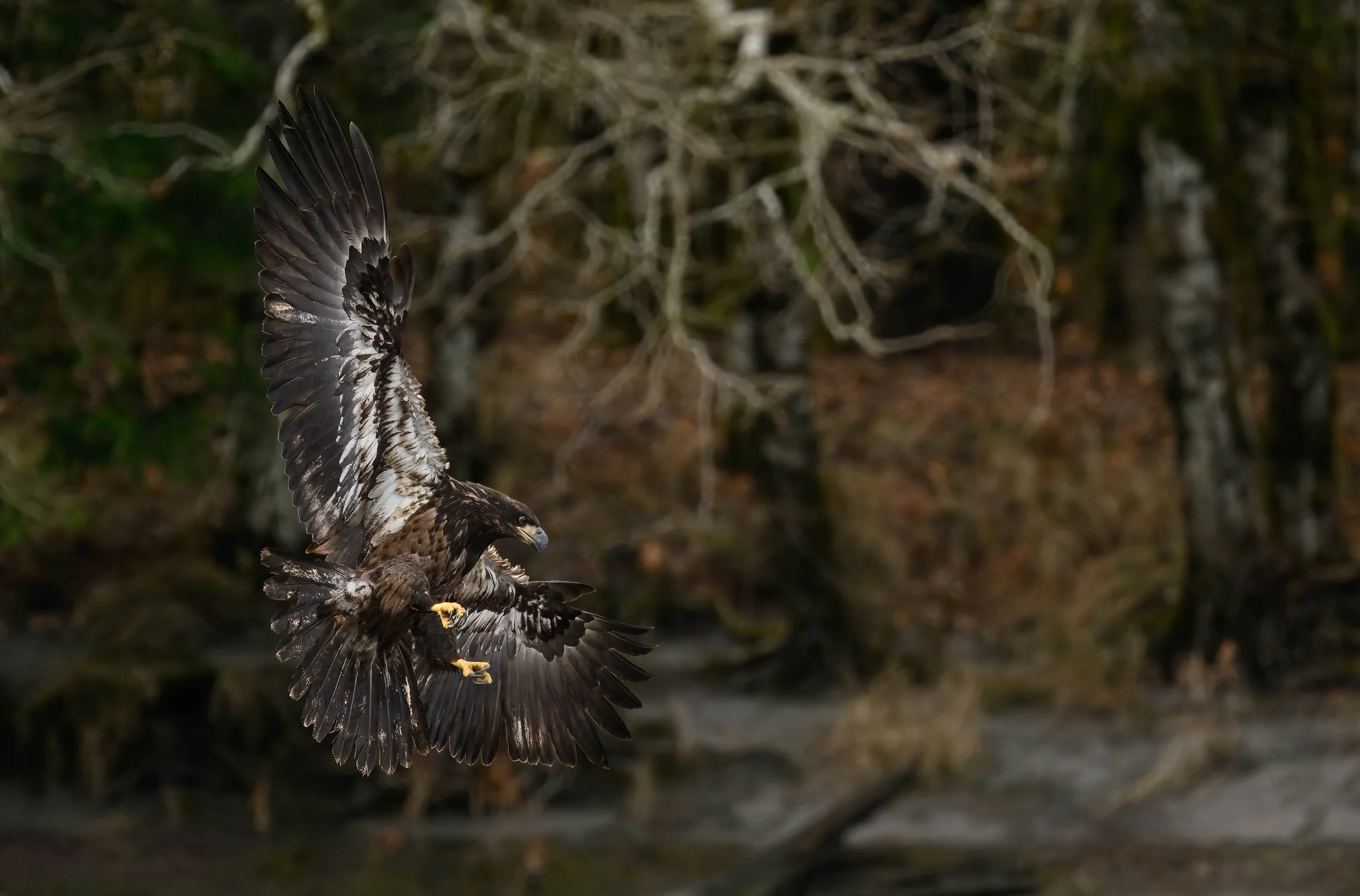
Witnessing a Living System
Watching eagles feed along salmon rivers is a lesson in cycles. Life feeding life. Death sustaining ecosystems. Oceans nourishing forests hundreds of kilometers inland.
It’s a reminder that conservation isn’t about protecting individual species, it’s about protecting relationships. When salmon runs are healthy, entire ecosystems thrive. When they falter, the effects ripple outward.
Our coastal expeditions near Squamish offer opportunities to witness this winter phenomenon firsthand, spending time along salmon rivers and learning how these ancient cycles continue to shape the coastal rainforest.