
Giants of the North Pacific: Steller Sea Lions Along British Columbia’s Coast
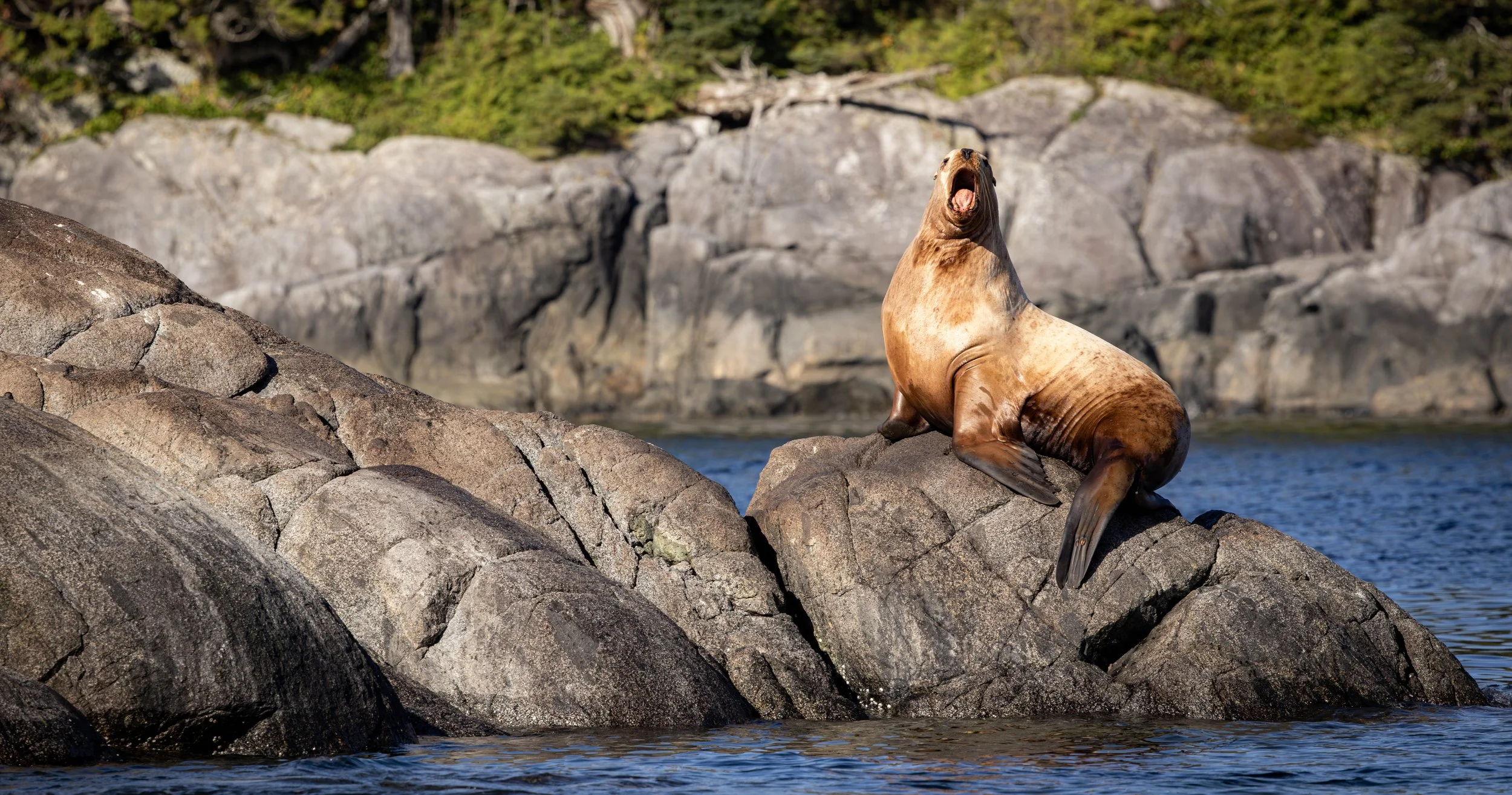
Along the rugged coast of British Columbia, where swell meets stone and tides shape the land, massive shapes haul themselves onto wave-washed rocks. Steller sea lions that are loud, imposing, and unmistakable, and are the largest of the eared seals in the North Pacific. Their presence is both ancient and essential, woven into the marine ecosystems that define the Great Bear Rainforest coast.
Watching a Steller sea lion colony is a full sensory experience: deep bellows echoing off cliffs, bodies piled together in constant motion, a scent reminiscent of a busy fish market at low tide, and the rhythmic surge of ocean water beneath them.
Built for Life at Sea
Steller sea lions belong to the otariid family, meaning they have external ear flaps and powerful, rotating hind flippers that allow them to move with surprising agility on land. Adult males can weigh over 1,000 kilograms, while females are significantly smaller, a size difference that plays a role in their social structure.
Their bodies are adapted for deep, cold-water diving:
A thick layer of blubber for insulation and energy storage
Streamlined shape to reduce drag underwater
High oxygen storage capacity in blood and muscles
The ability to slow heart rate during dives
Steller sea lions can dive hundreds of meters in search of prey, foraging across nearshore waters and the continental shelf for fish and squid.

Social Lives and Reproduction
Steller sea lions are highly social animals. During the breeding season, which peaks in early summer, they gather at rookeries where dominant males establish territories and defend access to females.
Reproduction follows a familiar marine mammal pattern:
Pups are born on land at rookeries
Females mate again shortly after giving birth
Delayed implantation ensures timing aligns with food availability
Pups remain dependent on their mothers for many months, learning to swim and hunt while returning to haul-out sites to rest and nurse.
Outside of breeding season, sea lions spread out to forage widely, often forming large groups at haul-outs where they rest, socialize, and avoid predators.
A Long History Along the BC Coast
Steller sea lions have occupied the northeastern Pacific for thousands of years, long before modern coastlines were mapped. Indigenous communities have coexisted with these animals for generations, recognizing their role within marine ecosystems.
Historically, Steller sea lions were heavily impacted by human activity, including:
Commercial hunting
Predator control programs
Competition with fisheries
By the mid-20th century, populations declined significantly in parts of their range.
Current Conservation Status
Today, Steller sea lions are listed as Special Concern in Canada, with some populations recovering while others remain vulnerable. Along BC’s central coast, their numbers have stabilized in many areas, making sightings more common than in previous decades.
However, challenges remain:
Changes in prey availability
Climate-driven shifts in ocean conditions
Disturbance at haul-out and rookery sites
Protecting haul-out sites and maintaining healthy fish populations are critical to their long-term survival.
Life Along the Great Bear Rainforest Coast
On BC’s central coast, Steller sea lions haul out on rocky islets scattered along the shoreline, often within sight of temperate rainforest. These sites provide safety, visibility, and easy access to productive feeding grounds.
As members of the northeastern Pacific marine community, Steller sea lions play a vital role in ecosystem balance. They are both predators and indicators—reflecting the health of the ocean systems they depend on.
Encountering Steller sea lions in the wild offers a powerful reminder of the scale, complexity, and resilience of life along the Great Bear Rainforest coast.