
Into the Forest: An Hour with Chimpanzees in Kibale
The experience begins long before you ever see a chimpanzee.
At the entrance to Kibale Forest National Park, we gathered for an orientation. Clear instructions, expectations, and a reminder that we were stepping into an active research landscape, not a stage-managed wildlife encounter. We were divided into small groups and introduced to our rangers, the people who would guide us through the forest and interpret what we were about to see.
We learned that Kibale is home to multiple wild chimpanzee troops, several habituated groups, and others still in the long process of habituation. All are monitored for research, with much of the long-term funding coming from organizations like the Jane Goodall Institute. This wasn’t tourism layered onto conservation, it was conservation.
Finding the Troop
Back in our safari vehicles, we followed a park vehicle deeper into the forest. Eventually, we stopped beneath towering trees, where scouts who had been tracking chimpanzees all morning relayed the troop’s location. The message was short: the chimps had been found.
About ten minutes into our walk, we spotted them. Chimpanzees moving through the trees, with three individuals on the ground below. As we settled in, the rain began. Almost immediately, the chimps climbed higher, tucking themselves into dense foliage like living umbrellas, almost looking like they were pouting about the weather. Our guide explained this was common behaviour; chimps dislike rain and seek cover when it starts.
Then the forest changed.
Calls began to rise. Soft at first, then building. A few chimpanzees descended. One took off through the undergrowth, and as we paused to photograph the individuals near us, our guide suddenly turned and said, “My group, come this way.” He broke into the forest after the fleeing chimp.
“I don’t want you to miss the real-life chimp empire,” he said.
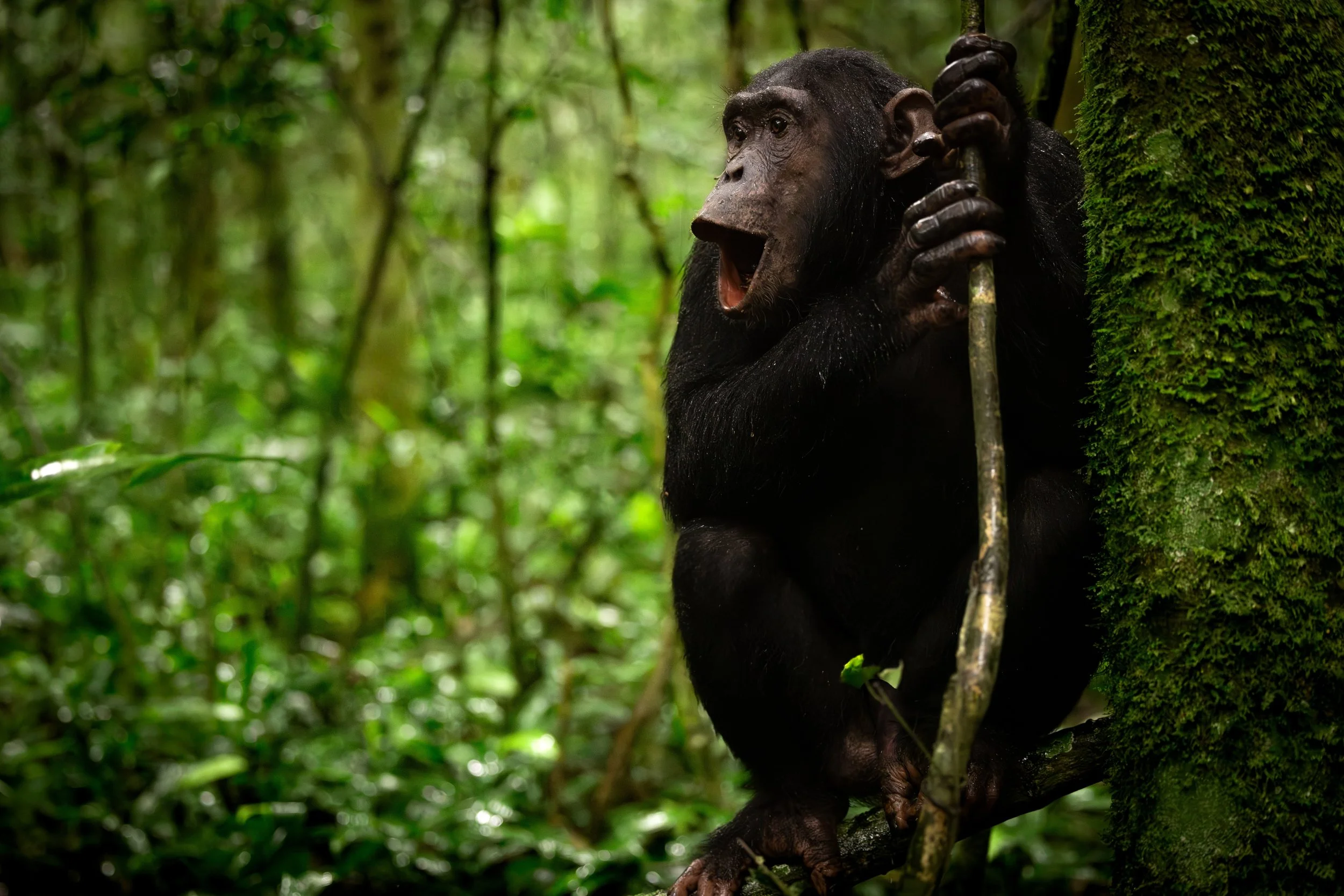
The Rain Dance
Trusting the guide meant walking away from perfect photo opportunities, unsure if anything better would follow. It turned out to be the right decision. The calls returned, louder, closer, layered. Chimps began emerging from every direction. What followed was chaos in the most extraordinary sense.
Chimpanzees ran across the forest floor, crashed through branches overhead, shook saplings violently, and slammed limbs against the ground in raw displays of strength. They screamed, chased, and leapt, sometimes brushing past our legs as if we weren’t even there.
It was impossible to count them. Impossible to predict where to look next. The forest was alive.
And then, just as suddenly, it settled.
Stillness After the Storm
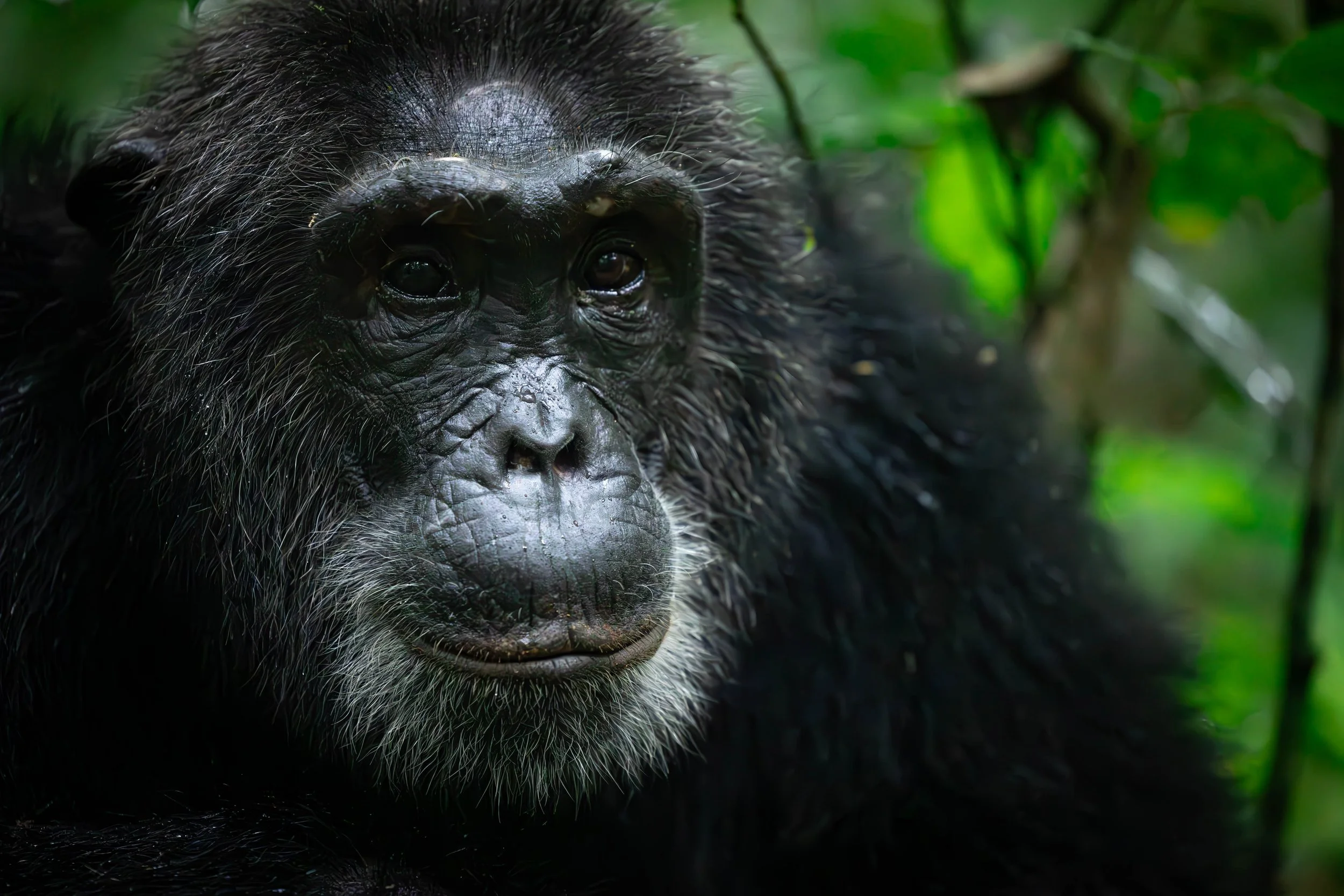
The chimps sat on damp logs and roots, arms folded, waiting out the rain. This was when the experience shifted. The spectacle gave way to observation.
The alpha male sat calmly, watching his troop with quiet authority. He barely moved, just a slow turn of the head, a flick of the eye. Rain beaded on dark fur. Light caught in their eyes as the forest softened again.
These moments, when animals are doing nothing, are often the most revealing. You don’t just see them; you sense thought, awareness, and social complexity unfolding in silence.
Why This Experience Matters
At the end of our hour, we learned what chimpanzee tourism truly supports:
20% of permit fees go directly to local communities, funding schools, health centres, and infrastructure
The remainder supports ranger salaries and daily chimpanzee protection
Tourism has incentivized forest restoration, with former grasslands and swamps being converted back into chimp habitat
Our guide explained that the Kanyantale community was the first group habituated for tourist tracking in Kibale, beginning in 1993. Today, conservation and community well-being are deeply intertwined.
That hour in the forest felt primal, unscripted, and completely real. The chimpanzees ignored us entirely. We were simply allowed to witness their world, rain, noise, stillness and all. My camera was soaked. I wouldn’t change a thing.