
Life Before the First Footprint: Grizzly Bear Reproduction
Grizzly bears live long, complex lives shaped by seasons, food availability, and survival strategies refined over thousands of years. Few aspects of their biology are as fascinating as reproduction. From delayed implantation to cubs taking their first steps out of the den, grizzly reproduction is a slow, deliberate process tied tightly to the rhythms of the land.
Understanding how grizzlies reproduce offers insight into why they are so vulnerable to disturbance and why protecting their habitats matters so deeply.
Reaching Sexual Maturity
Grizzly bears do not reproduce quickly. Females typically reach sexual maturity between 5 and 8 years of age, depending on food availability and overall health. In rich ecosystems, bears may mature earlier; in harsher environments, reproduction may be delayed.
Even once mature, females do not breed every year. Raising cubs is energetically demanding, and successful reproduction depends on having access to abundant, high-quality food.
A Unique Reproductive Strategy
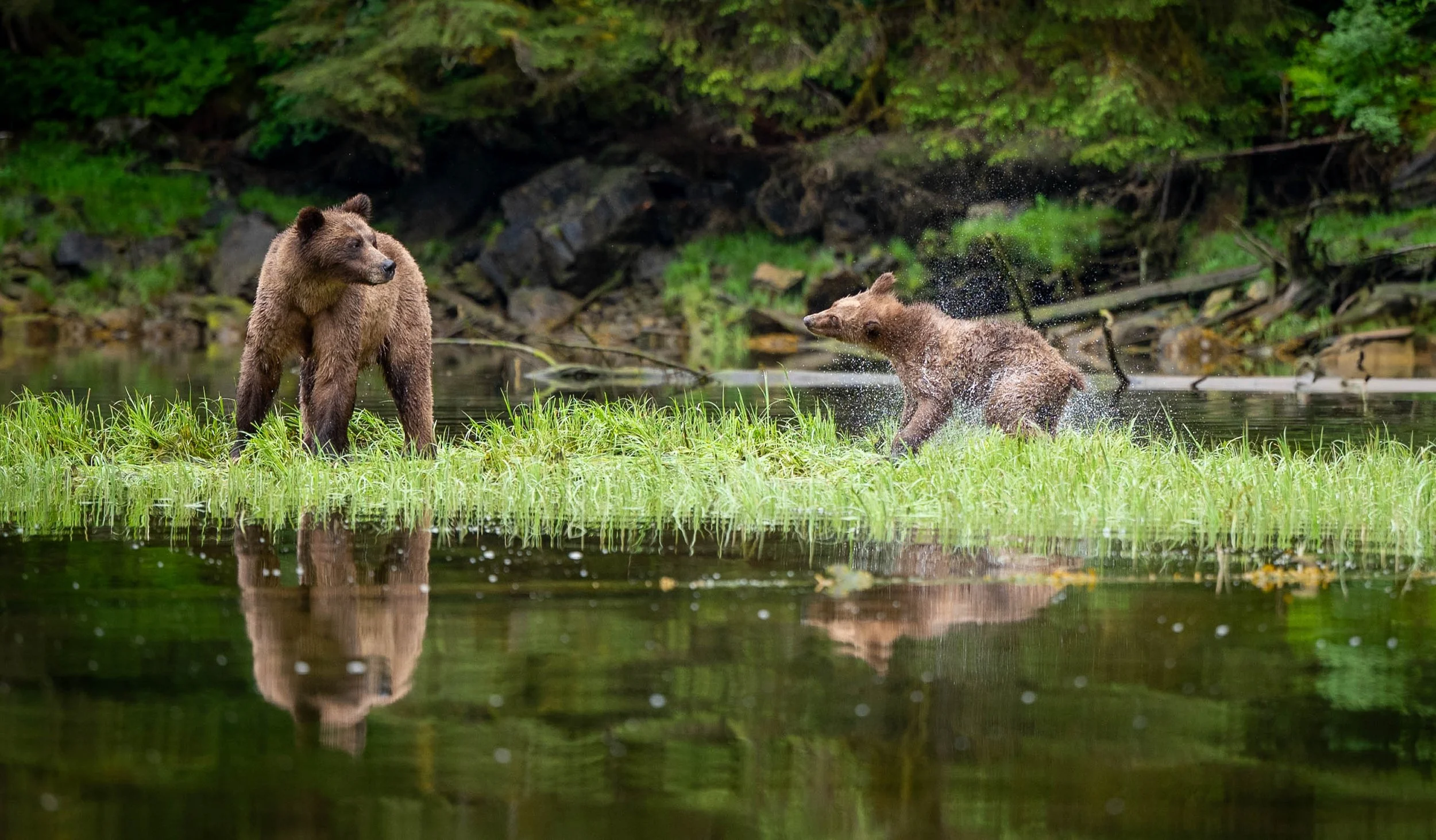
Grizzly bears use a reproductive system designed for flexibility and survival. Mating occurs in late spring and early summer, but pregnancy does not begin immediately.
Key features of grizzly reproduction include:
Induced ovulation, meaning ovulation occurs in response to mating
Mating with multiple partners, which can increase genetic diversity and offer a form of cub protection
Delayed implantation, where fertilized embryos pause development
After mating, embryos float freely in the uterus for months. Only in the fall, if the female has accumulated enough fat reserves, does implantation occur. If conditions aren’t right, the pregnancy ends without the mother’s body investing further energy, and the embryo is reabsorbed… she will try again next year..
This system ensures that cubs are only born when the mother has a realistic chance of supporting them. It is natures way of protecting both mums and cubs from an unsuccessful outcome.
Birth in the Winter Den
Grizzly cubs are born in the den during winter, usually between January and February. At birth, cubs are incredibly small (only around 1lb!) blind, nearly hairless, and entirely dependent on their mother.
Dens are chosen carefully, often on steep slopes or in remote areas that provide:
Insulation from cold temperatures
Protection from predators and disturbance
Stable conditions for nursing
While in the den, the mother does not eat or drink. She survives entirely on fat reserves built up during the previous feeding season, converting that energy into milk to sustain her cubs. Her milk is incredibly rich in fat (20-25%) in order for the cubs to gain weight quickly, weighing as much as 20lbs when they leave the den. An amazing amount of weight to gain in a short period, all thanks to their mother.
First Steps Into the World
When spring arrives, the family emerges from the den. For the cubs, this is their first exposure to the outside world, light, weather, sound, and movement. These early weeks are critical.
The mother is highly protective, balancing the need to feed with keeping her cubs safe. This is one reason why spring is a sensitive time for bears, particularly in areas where human activity overlaps with denning habitat.
Growing Up in the Great Bear Rainforest
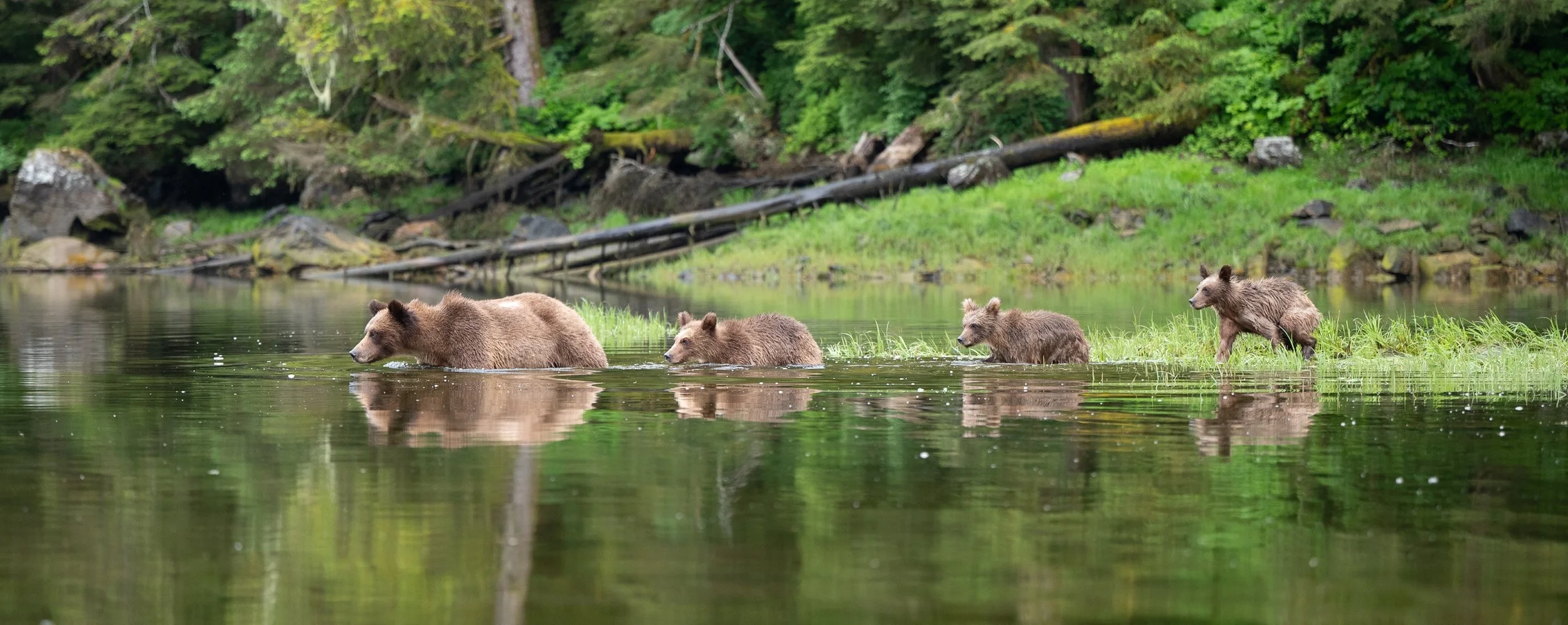
In the Great Bear Rainforest, cubs typically stay with their mother for 2 to 3 years. During this time, she teaches them everything they need to survive:
Where and what to eat
How to navigate complex terrain
How to avoid danger, including other bears
This extended learning period means that females reproduce slowly, often only once every three to four years. While this limits population growth, it produces cubs with a high chance of survival in a challenging environment.
Why Reproduction Shapes Conservation
Grizzly bears’ slow reproductive rate makes populations particularly sensitive to disturbance and loss. Every female, every cub, and every secure denning area matters.
Protecting grizzlies means protecting the conditions that allow this careful, remarkable process to unfold year after year, generation after generation.