
Winter in the Canadian Rockies: Silence, Snow, and Wild Possibility
Winter transforms the Canadian Rockies in ways that are easy to overlook if you only experience this place in summer. Snow reshapes familiar valleys, sound carries farther through cold air, and the pace of life slows, both for wildlife and for those willing to meet the season on its own terms.
With fewer people on the landscape, winter offers something increasingly rare: space. Space to observe, to wait, and to let the day unfold without pressure.
What Makes Winter So Special
As temperatures drop and crowds thin, the Rockies reveal a quieter side. Trailheads (mostly) empty, viewpoints fall silent, and the mountains feel vast and intimate at the same time. Crisp air sharpens light and contrast, while snow simplifies the landscape, drawing attention to form, movement, and subtle detail.
With fewer visitors, there’s flexibility to respond to what the day offers rather than following a rigid plan. Wildlife, weather, and light become the guide.
Wildlife of the Winter Rockies
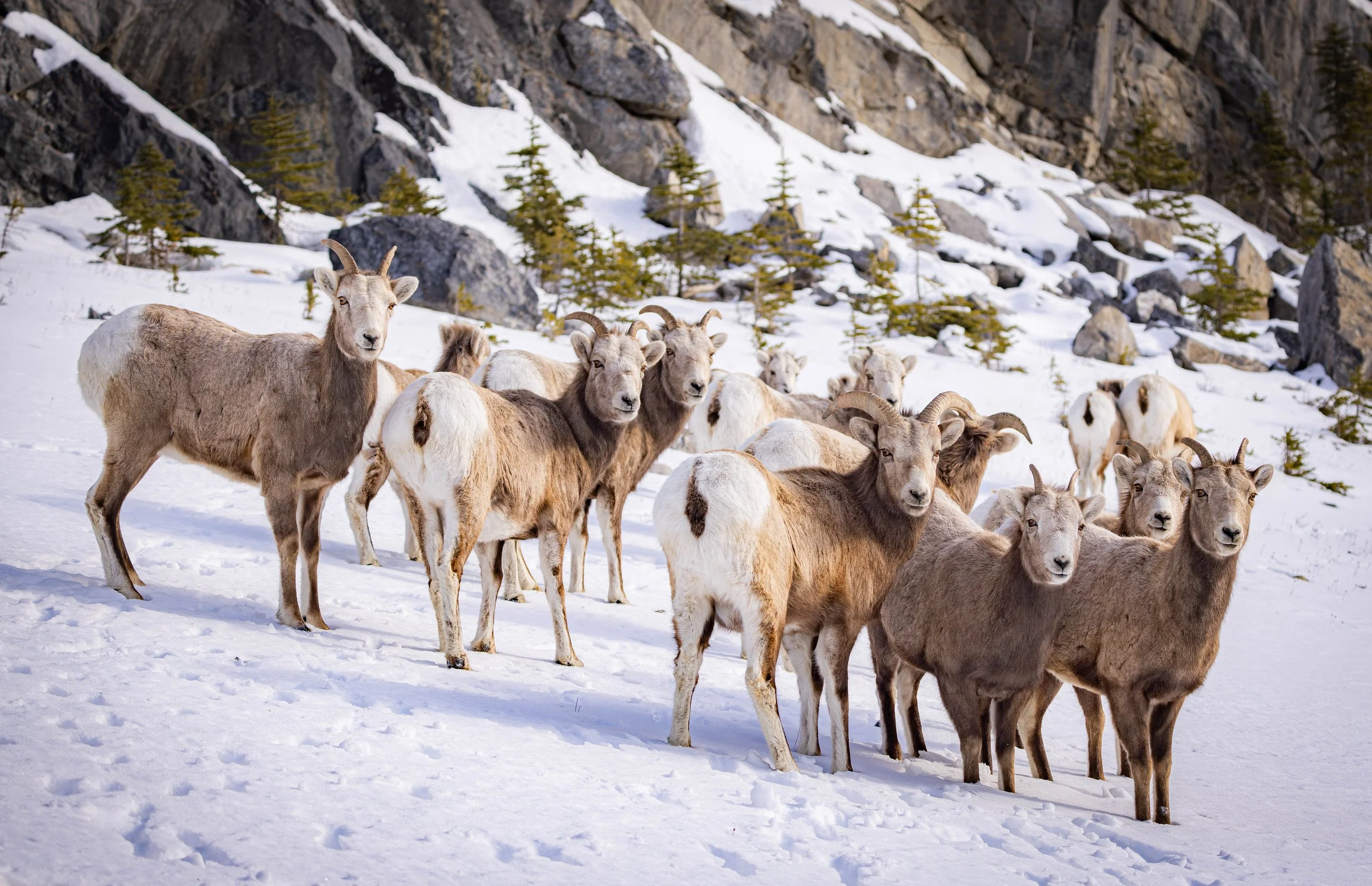
Despite the cold, many animals remain active throughout winter. Elk gather in valley bottoms where snow is shallower and forage more accessible. Bighorn sheep cling to steep, windswept slopes, using terrain that sheds snow and offers escape from predators.
Tracks often tell as much of the story as sightings themselves. Lines etched into fresh snow that reveal movement, behaviour, and survival strategies. Coyotes, wolves, foxes, and smaller mammals leave behind clues that turn the landscape into a living field journal.
Living Through the Cold
Winter is a season defined by adaptation. Animals here survive in two main ways: by avoiding the cold entirely, or by enduring it.
Some species hibernate, lowering their heart rate and metabolism to conserve energy until spring. Others remain active, relying on thickened coats, fat reserves, and behavioral changes to survive. Movement becomes efficient. Energy is conserved. Every decision matters.
This contrast between hibernation and endurance highlights the incredible diversity of survival strategies shaped by the same environment.

Letting the Day Unfold
Winter travel demands flexibility. Roads may close. Weather can shift quickly. Wildlife appears on its own schedule. Rather than obstacles, these variables become part of the experience.
With fewer people competing for space, there’s room to slow down:
Waiting quietly for wildlife movement
Adjusting plans to follow light or weather
Taking time to observe rather than rush
This slower pace creates space for reflection and connection—not just to wildlife, but to the landscape itself.
The Beauty of Challenge
There’s no denying that winter in the Rockies can be demanding. Cold fingers, layered clothing, and changing conditions are all part of the reality. But these challenges sharpen awareness. They pull you into the present moment.
In the stillness of winter, the mountains feel less like a backdrop and more like a living system, one that asks patience, attention, and respect.