
Listening to Bears: Why Ethical Viewing Matters
Bear viewing is often described as a once-in-a-lifetime experience. Standing in a wild place, watching a bear move through its world, can be powerful and humbling. But how that experience unfolds matters just as much as the moment itself. Ethical bear viewing isn’t a bonus or an optional add-on. It is the foundation that everything else rests on.
Any operator offering bear viewing should be able to clearly explain not only where you’ll see bears, but how those encounters will be approached. Ethics determine whether wildlife tourism supports conservation or quietly undermines it.
What Ethical Bear Viewing Really Means
At its core, ethical bear viewing is about choice. Bears are never staged, baited, or coerced into an encounter. They decide if an interaction continues or ends, and our responsibility is to respect those decisions.
Unlike some animals, bears are fairly non-verbal communicators. They don’t announce discomfort with sound. Instead, they speak through posture, movement, and subtle shifts in behaviour. Ethical viewing requires guides and guests to learn this language and listen when it’s spoken.
This approach prioritizes:
The bear’s comfort over proximity
Observation over pursuit
Long-term welfare over short-term photos
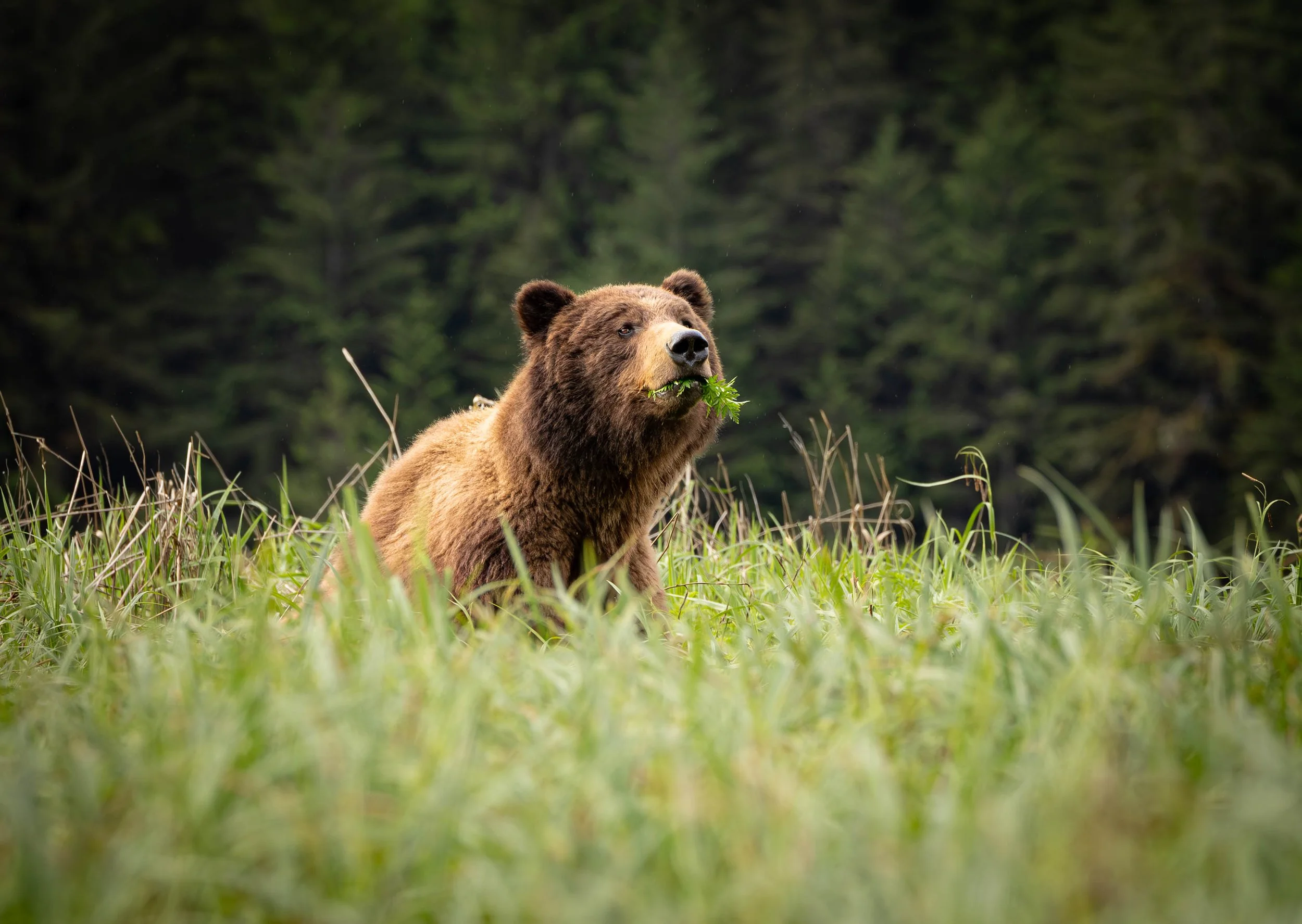
Reading Bear Body Language
Understanding bear behaviour is essential to ethical viewing. Bears constantly communicate how they’re feeling through their bodies, and those signals guide every decision we make in the field.
Signs a bear may be uncomfortable include:
Pausing feeding or play to watch us closely
Lifting its head repeatedly and orienting toward people
Changing direction or increasing distance
Leaving the area entirely
When these behaviours appear, ethical practice means we stop what we’re doing. We pause, create space, and allow the bear time to decide what comes next.
Sometimes, after a break, the bear relaxes and resumes natural behaviour. Other times, it continues to move away. Both outcomes are valid. And both are respected.
Giving Bears the Power to Choose
Ethical bear viewing is never about pushing closer. It’s about responding appropriately.
There are days when bears tolerate closer observation and continue feeding, socializing, or resting. There are other days when viewing happens from a greater distance. Neither is better than the other. What matters is that the bear remains relaxed and in control of the interaction.
This means:
We never follow a bear that is actively moving away
We adjust our position rather than forcing the bear to adjust theirs
We accept that sometimes the best choice is to leave entirely
By giving bears agency, we reduce stress and allow natural behaviour to continue uninterrupted.
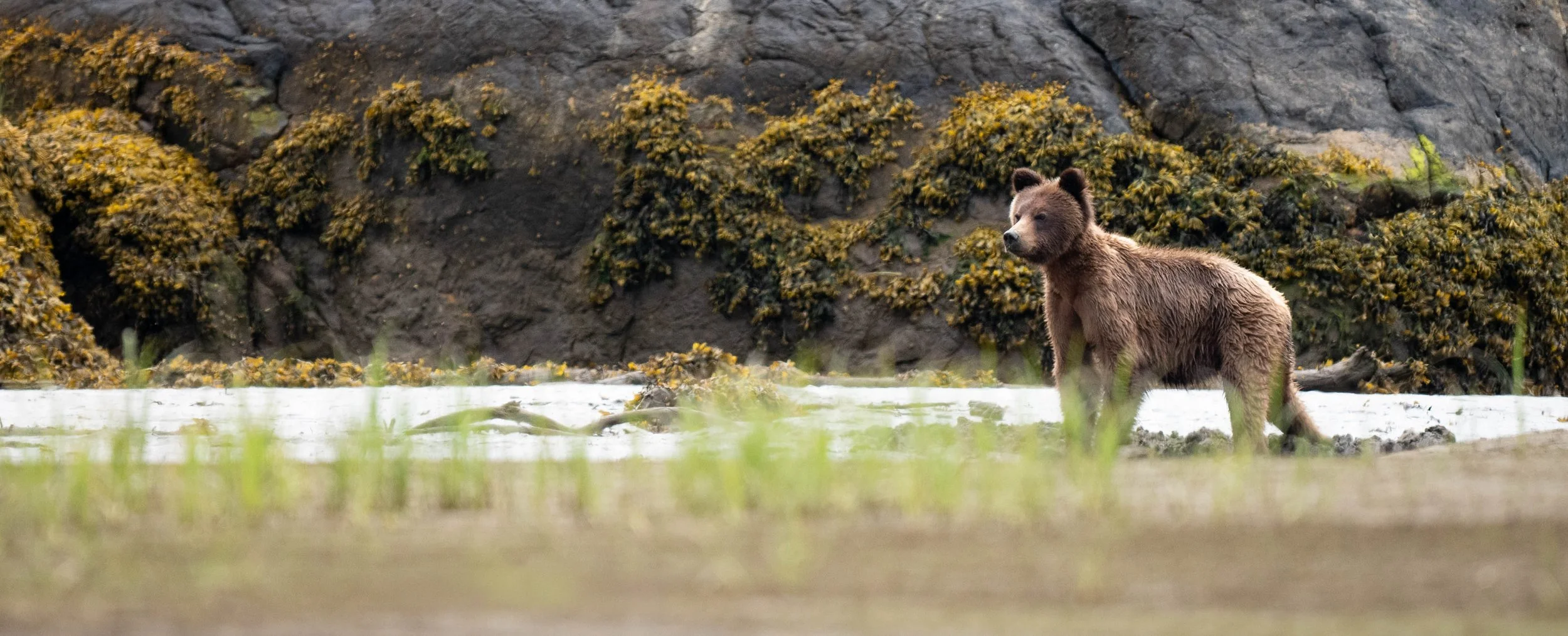
Why This Matters for Conservation
Ethical viewing doesn’t just protect individual bears, it supports entire populations. Repeated stress from human pressure can:
Disrupt feeding patterns
Push bears out of prime habitat
Increase conflict with people elsewhere
Teach bears to associate humans with pressure or risk
Over time, this erodes the very behaviours that make wild bears wild.
In contrast, ethical viewing fosters coexistence. Bears that experience predictable, respectful human behaviour are less likely to be displaced and more likely to continue using critical habitats like estuaries, riverbanks, and salmon streams.
The Role of Guides and Guests
Ethical viewing is a shared responsibility. Guides bring experience, behavioural knowledge, and situational awareness. Guests bring curiosity, patience, and trust in the process.
Together, this creates encounters that feel calm, intentional, and deeply respectful, experiences rooted in understanding rather than adrenaline.
Ethical bear viewing isn’t about how close you get. It’s about how well you listen. When bears are allowed to set the terms, the experience becomes richer, more meaningful, and far more sustainable. For them and for us.