
Hidden Worlds at Low Tide: Exploring the Intertidal Zone of British Columbia
There is something undeniably exciting about wandering the shoreline at low tide on the coast of British Columbia. Every overturned rock, shallow tide pool, or patch of seaweed holds the promise of discovery. One moment you might be admiring colourful sea stars clinging to the rocks, and the next you may spot a crab carefully disguised with bits of algae or a giant moon snail moving slowly into the sand.
Exploring the intertidal zone is like stepping into another world. A place where land and sea overlap, and where creatures have evolved remarkable adaptations to survive changing tides, crashing waves, and exposure to the elements. For naturalists, photographers, and anyone with a sense of curiosity, few experiences are as rewarding as searching these coastal habitats.
A Landscape Constantly in Motion
The intertidal zone is the area between the high and low tide marks. Twice each day, this environment is flooded by seawater and then exposed to the air, creating one of the most dynamic ecosystems on Earth.
Organisms living here must cope with dramatic changes in temperature, salinity, moisture, and wave action. Despite these challenges, the intertidal zone supports an astonishing diversity of life. Along British Columbia's coastline, from sheltered bays to wave-battered rocky shores, every low tide reveals a new opportunity to observe this hidden ecosystem.
Moon Snails: Predators Beneath the Sand
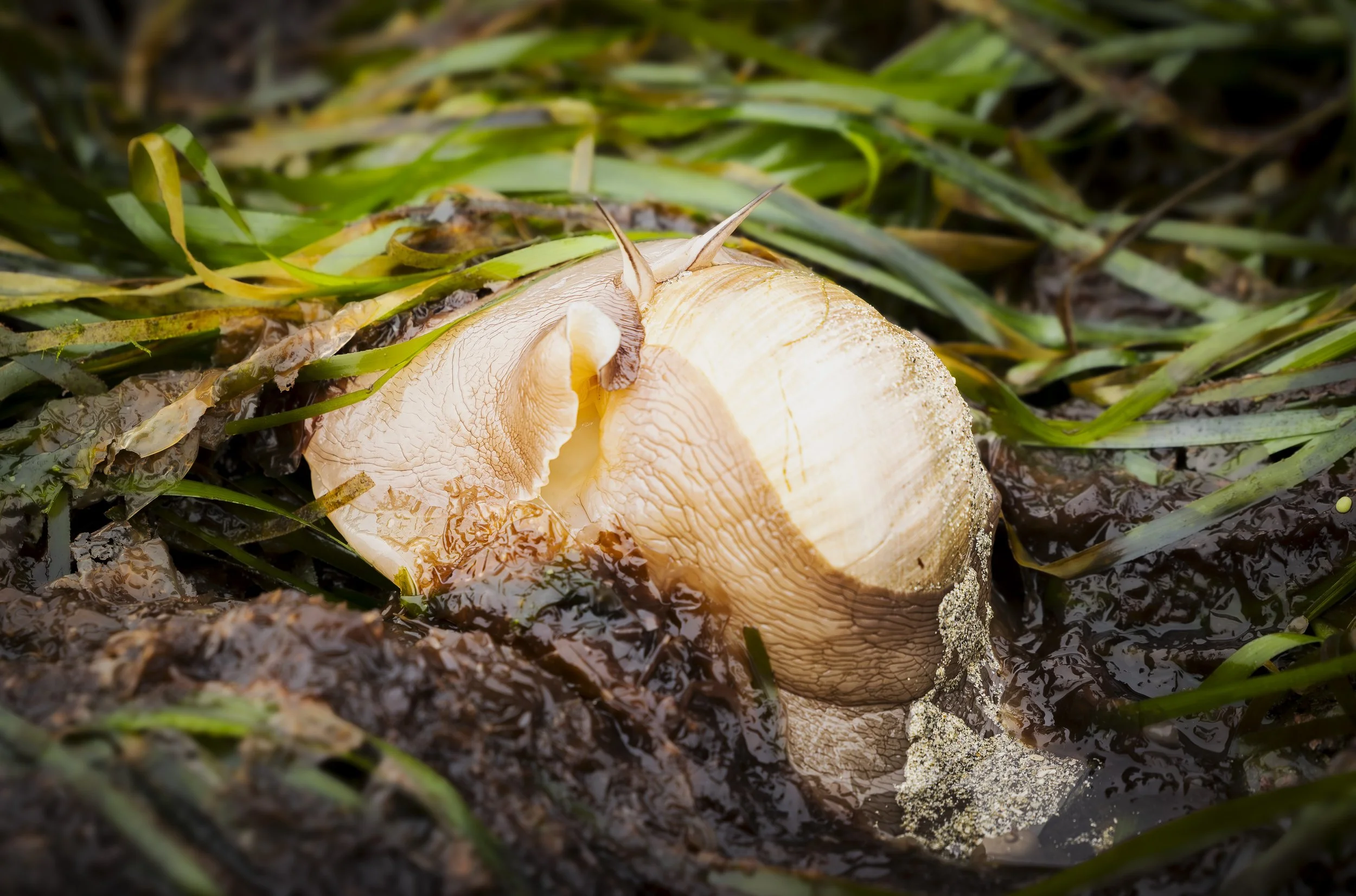
One of the most fascinating creatures found on sandy beaches is the moon snail. At first glance, their smooth, rounded shells appear deceptively simple, but these animals are formidable predators.
Moon snails spend much of their time buried beneath the sand, using a large muscular foot to move surprisingly quickly through the sediment. They prey primarily on clams and other bivalves, locating them beneath the surface before drilling a perfectly circular hole through the shell using a specialized rasping organ called a radula.
Moon snails reproduce by laying their eggs in a distinctive ribbon-like structure known as a “sand collar,” which is formed from sand grains, mucus, and thousands of tiny eggs. The female spreads this flexible, gelatinous sheet over the seafloor, where it hardens slightly and protects the developing embryos until they hatch and emerge into the sediment.
Sea Cucumbers: Nature's Cleanup Crew
Sea cucumbers may not be the most glamorous inhabitants of the intertidal zone, but they play an essential ecological role. These elongated echinoderms slowly crawl across the seafloor and tide pools, feeding on organic material and detritus.
By ingesting sediment and extracting nutrients, sea cucumbers effectively recycle organic matter and help keep marine ecosystems healthy. Their feeding activity aerates sediments in much the same way earthworms improve soil on land.
Some species possess impressive defence mechanisms. When threatened, certain sea cucumbers can expel sticky internal organs or specialized threads to deter predators—a remarkable adaptation that highlights just how unusual intertidal life can be.
Crabs with Character
The intertidal zone of British Columbia is home to numerous crab species, each with its own unique lifestyle.
Decorator crabs are among the most entertaining to observe. True to their name, these crabs actively attach pieces of algae, sponges, hydroids, and other organisms to hooked hairs on their shells. This living camouflage helps them blend seamlessly into their surroundings and avoid predators.
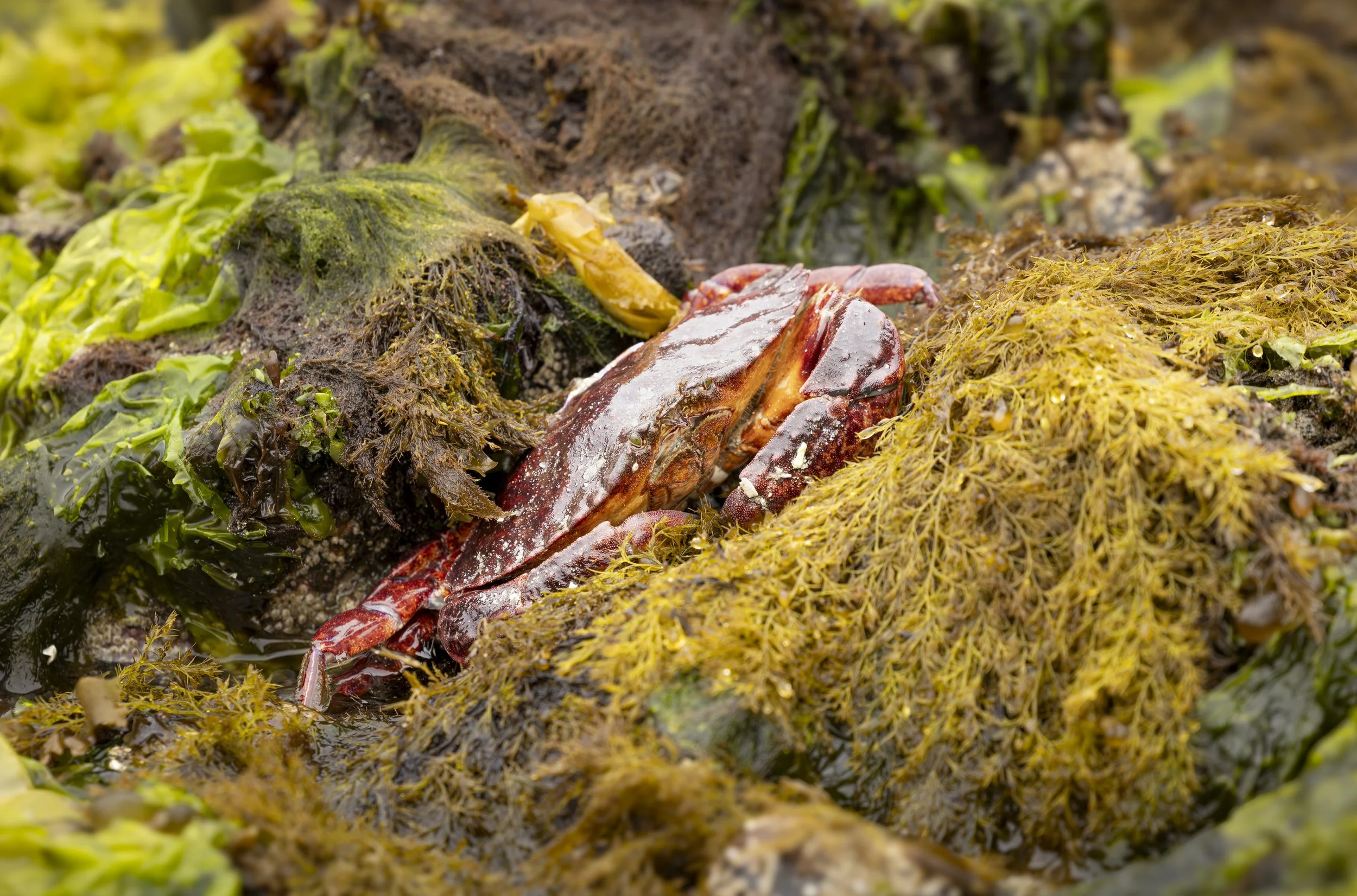
Red rock crabs, by contrast, rely less on disguise and more on strength. Recognizable by their deep red coloration and robust claws, these crabs are common residents of rocky shorelines. They are opportunistic feeders, consuming mussels, barnacles, snails, and a variety of other marine organisms. Their powerful claws allow them to crack open hard-shelled prey with ease.
Sea Stars: Icons of the Tide Pools
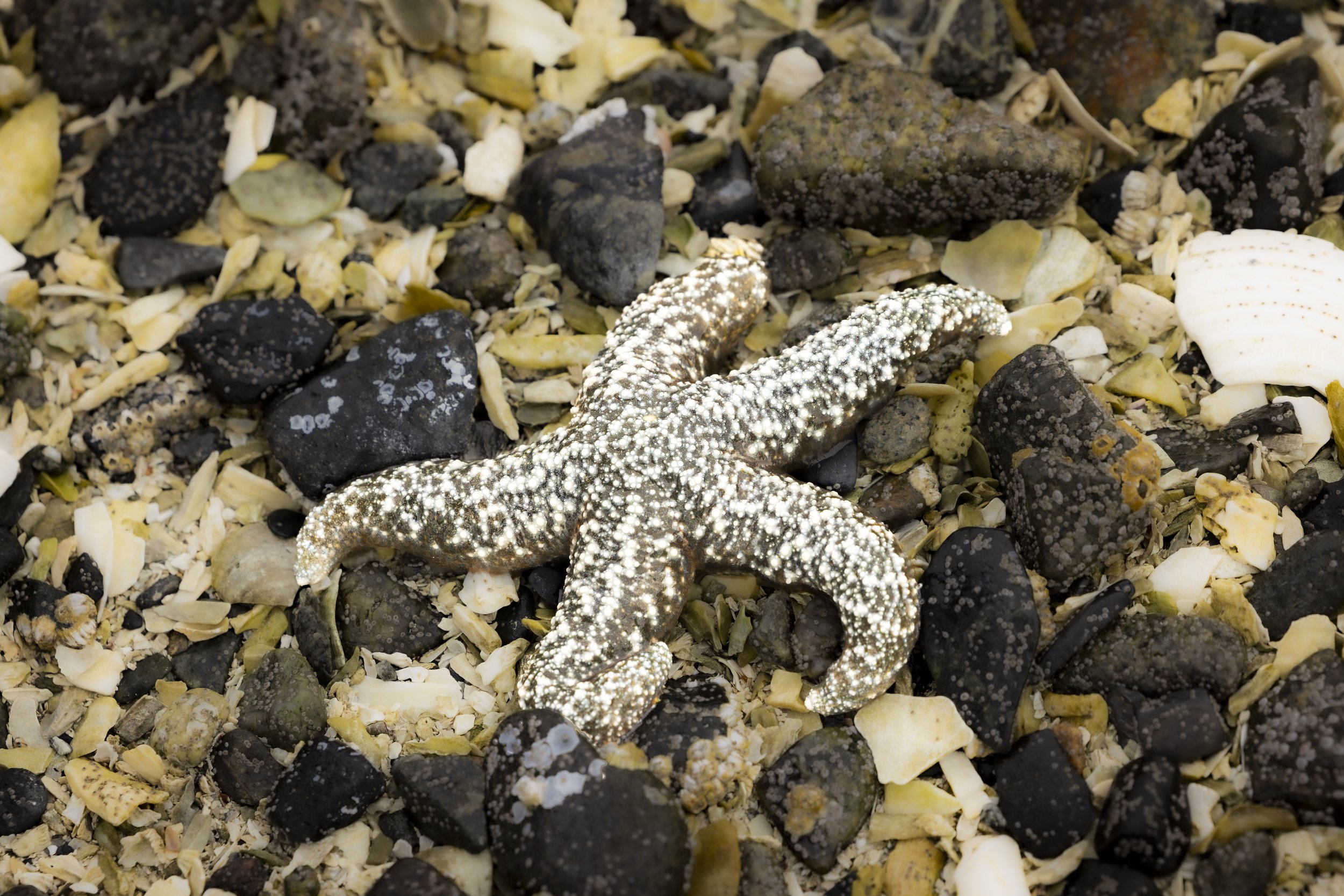
No exploration of British Columbia's intertidal zone would be complete without encountering sea stars. These iconic animals are often among the first creatures noticed in tide pools, clinging to rocks in brilliant shades of orange, purple, red, and brown.
Sea stars are powerful predators despite their seemingly gentle appearance. Many feed on mussels and other shellfish, using hundreds of tube feet to pry open shells before everting their stomachs to digest their prey externally.
Perhaps most remarkable is their ability to regenerate lost arms. In some species, a single remaining arm attached to part of the central disc can eventually regrow an entire individual.
Discover the Coast with wildsight expeditions
The intertidal zone offers endless opportunities for discovery, photography, and learning. Every low tide reveals something new, and no two shoreline explorations are ever the same. Join Wildsight Expeditions on one of our coastal adventures and experience the incredible diversity of British Columbia's shoreline firsthand as we explore tide pools, beaches, and the rich marine ecosystems that make this coast so extraordinary.