
Atlantic Puffins of Newfoundland: A Seabird Spectacle
Few birds capture the imagination quite like the Atlantic Puffin. With their brightly coloured bills, expressive faces, and comical waddling gait, puffins have become icons of the North Atlantic and one of the most sought-after wildlife experiences in Newfoundland. Yet behind their charming appearance lies a remarkable seabird perfectly adapted to life in one of the world's harshest marine environments.
Every spring and summer, thousands of visitors travel to Newfoundland in hopes of witnessing these charismatic birds returning to their breeding colonies. It is spectacle that has played out along the province's rugged coastlines for thousands of years. Afterall, you simply cannot be unhappy looking at a puffin, it’s impossible.
A Seabird Built for the Ocean
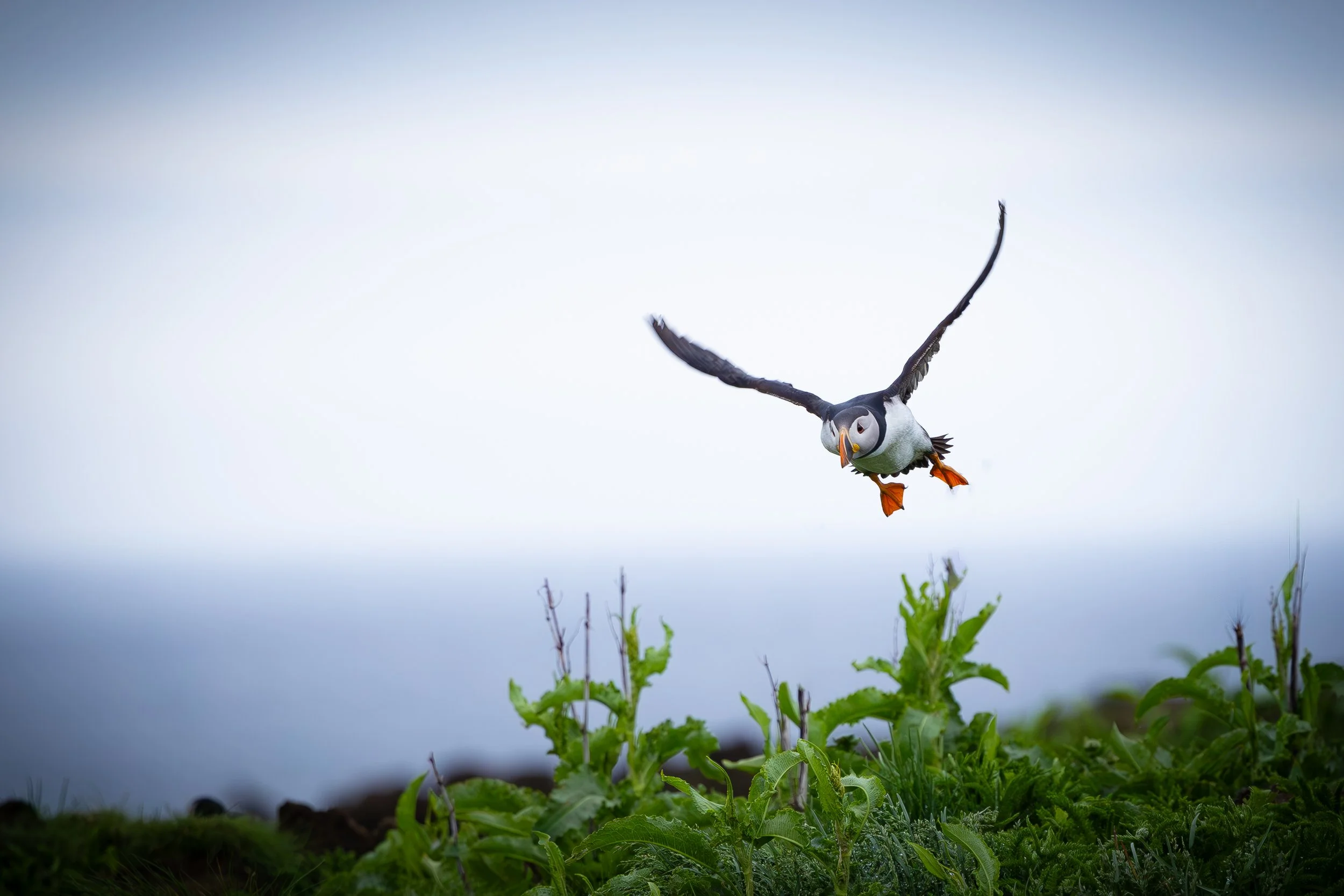
Often nicknamed the "clown of the sea" or the "sea parrot," the Atlantic Puffin (Fratercula arctica) spends the majority of its life far from land. Outside of the breeding season, puffins live almost entirely at sea, riding waves and feeding in the cold waters of the North Atlantic.
Puffins are superbly adapted for this lifestyle. Their compact bodies, waterproof plumage, and powerful wings allow them to "fly" underwater in pursuit of fish, reaching depths of over 50 metres. While they may appear awkward on land, they are agile swimmers and efficient hunters beneath the surface.
Their colourful bill, so striking during the breeding season, actually changes throughout the year. During winter, much of the brightly coloured outer bill sheath is shed, leaving a smaller and duller bill until spring returns. They look so different, that they were once considered two species, until it was discovered that they simply migrate!
The Puffin Life Cycle
Atlantic Puffins are long-lived birds, with many individuals surviving for more than 20 years. They do not begin breeding until they are four to six years old, and once paired, many mates reunite year after year at the same nesting burrow.
Each spring, puffins return to colonies scattered across rocky islands and sea cliffs throughout Newfoundland. They excavate burrows in grassy slopes or occupy crevices among rocks, where a single egg is laid.
Both parents share incubation duties and later work together to feed the chick, known as a puffling (thats right… a puffling). Over the course of several weeks, adults make countless trips between feeding grounds and the colony, delivering small fish to their growing offspring.
By late summer, the puffling leaves its burrow under the cover of darkness and heads out to sea, where it will spend several years before eventually returning to breed.
Masters of Fishing
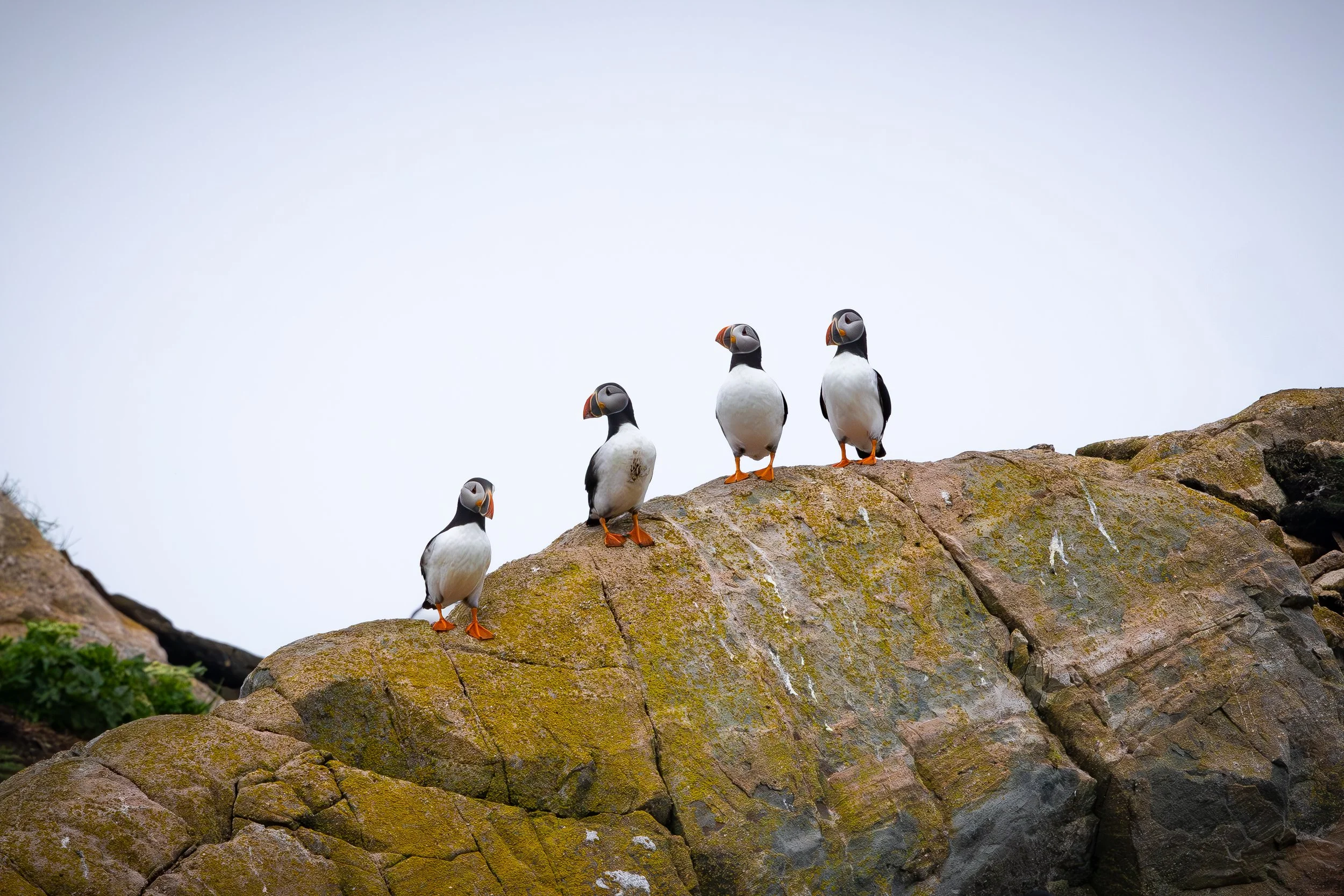
Puffins feed primarily on small schooling fish, and their diet changes depending on location and prey availability. In Newfoundland, capelin are among the most important food sources during the breeding season. Sand lance, herring, and juvenile cod may also be taken.
One of the puffin's most remarkable adaptations is its ability to carry multiple fish at once. Specialized spines on the roof of the mouth and tongue allow puffins to hold captured fish securely while continuing to hunt. It is not unusual to see an adult returning to the colony with a bill packed full of shimmering capelin.
The close relationship between puffins and forage fish means that changes in ocean conditions can influence breeding success. Years with abundant prey often result in healthy chicks, while poor food availability can reduce reproductive success.
Newfoundland: The Puffin Capital of North America
Newfoundland hosts the largest population of Atlantic Puffins in North America. Estimates suggest that approximately 95% of the continent's Atlantic Puffins breed in the province, representing more than two million pairs.
Some of the most famous colonies include the Witless Bay Ecological Reserve, located just south of St. John's, and the colonies surrounding Bonavista Bay and Elliston. Elliston is particularly well known because visitors can observe puffins from land at exceptionally close range.
Overall, Newfoundland's puffin population is considered relatively stable, and some colonies have shown increases over recent decades following historical declines caused by hunting and egg collection. However, puffins still face challenges, including climate change, shifting ocean conditions, and changes in prey availability. Continued monitoring and conservation efforts remain essential to ensure these birds continue to thrive.
Experience Puffins with Wildsight Expeditions
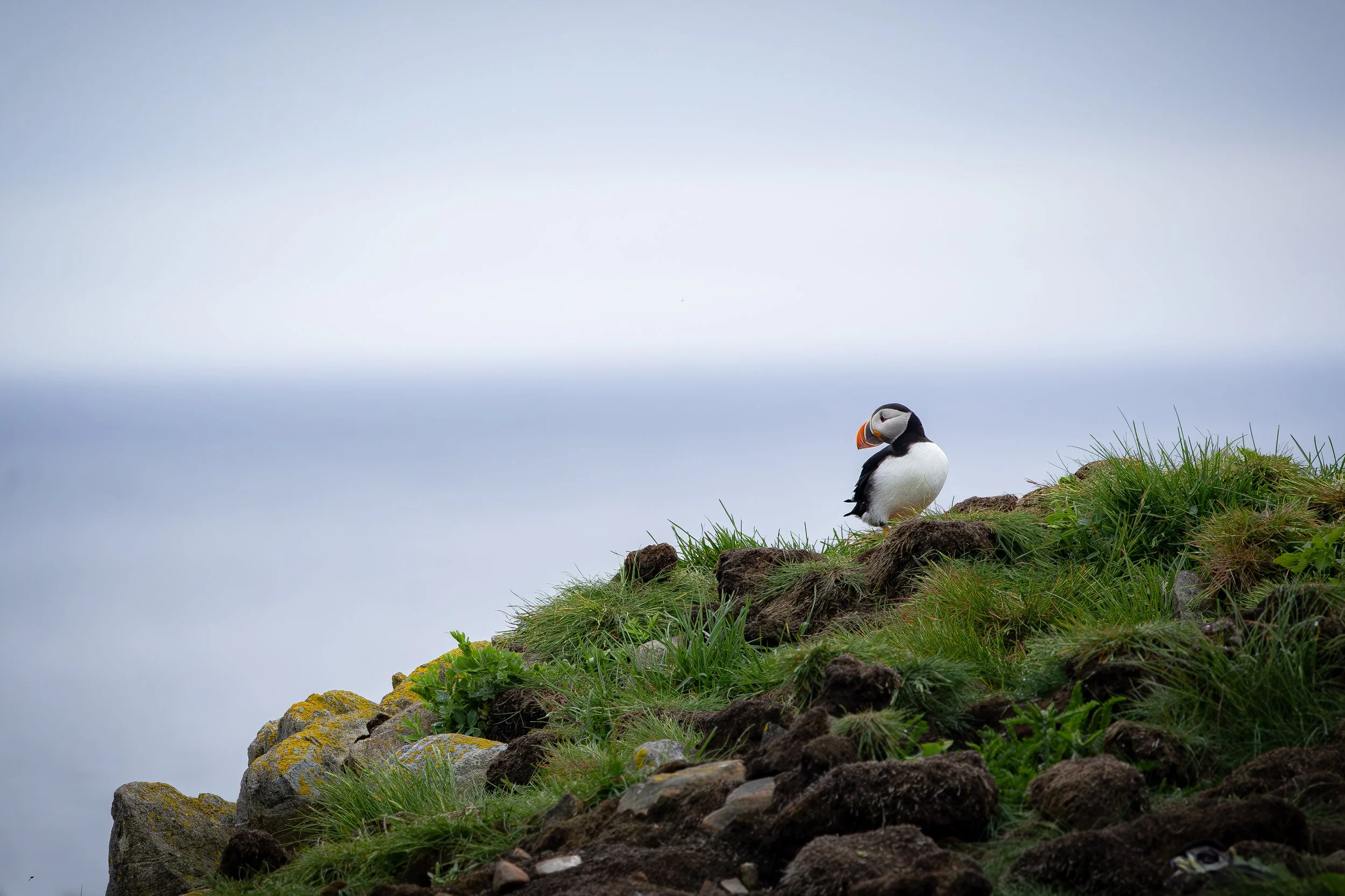
Seeing an Atlantic Puffin for the first time is an unforgettable wildlife experience. Join wildsight expeditions in Newfoundland and experience the incredible seabird colonies of the North Atlantic while photographing puffins and exploring one of Canada's most spectacular coastal landscapes.