
Bears, Whales, Wildflowers & Photography in the Khutzeymateen 2026
There are some trips that unfold exactly as planned and then there are the journeys that somehow exceed every expectation. Our recent expedition through the northern coast of British Columbia and into the Khutzeymateen Valley was firmly the latter: a week of incredible wildlife encounters, moody rainforest weather, quiet moments on the water, and photography opportunities that seemed endless.
Beginning the Journey
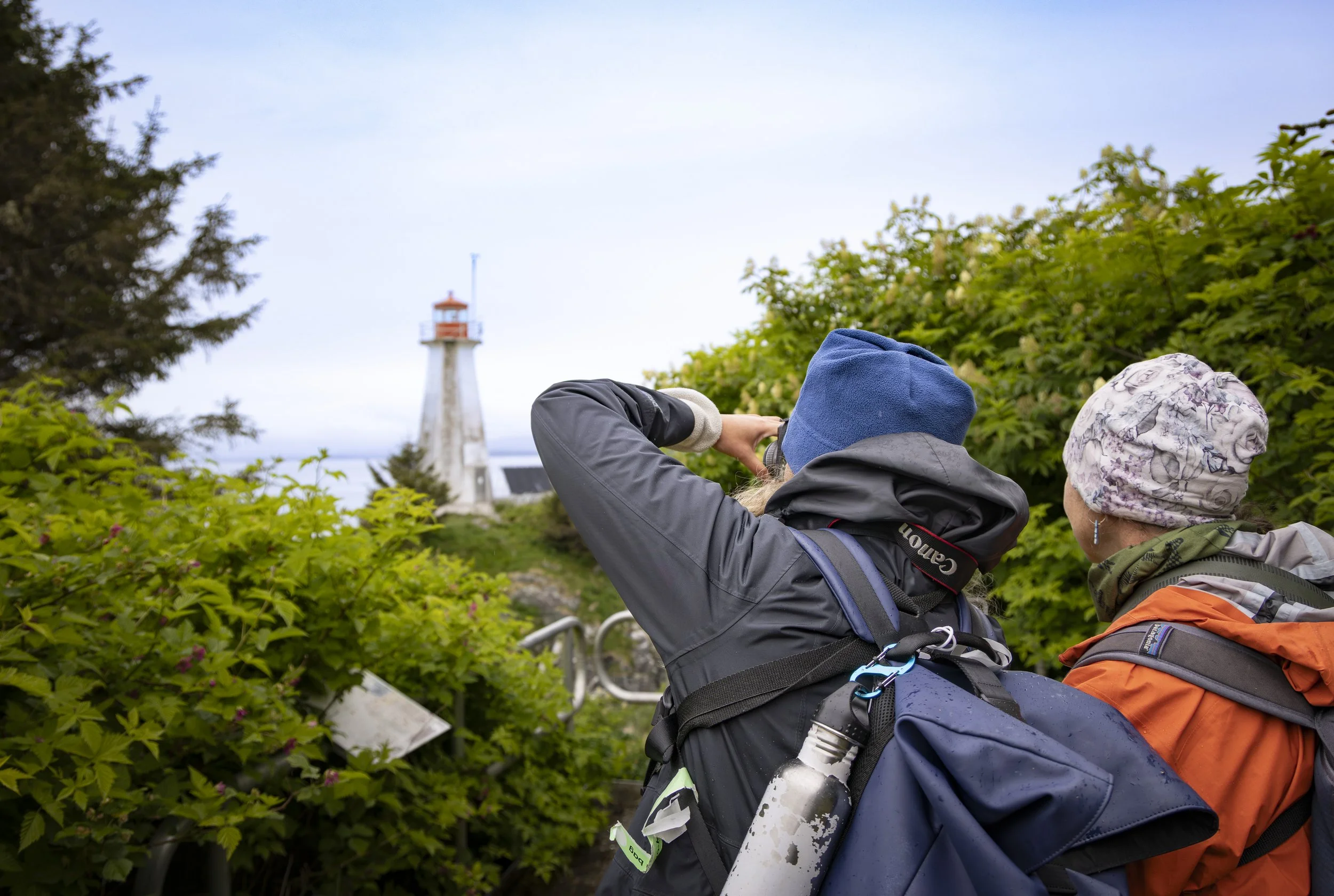
Our expedition began in Prince Rupert, where we departed under calm conditions and threaded our way through Venn Passage toward the Lucy Islands Conservancy. It was the perfect introduction to the coast: rugged shorelines, ancient rainforest, and the rich intertidal life that makes this ecosystem so productive.
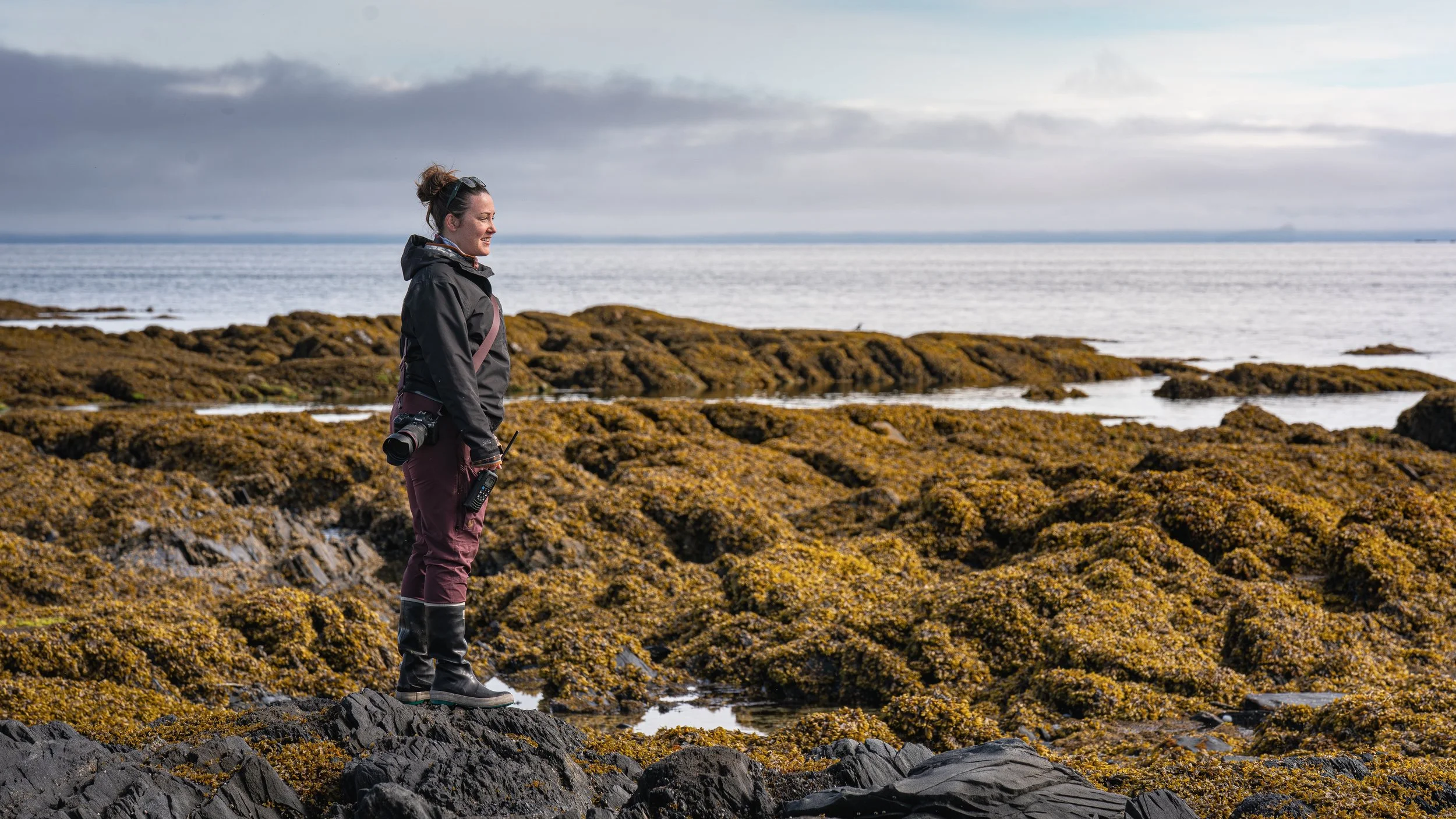
Our first landing gave everyone a chance to slow down and photograph the details of the coast. Tide pools became miniature worlds full of textures and colour with sea stars, anemones, crabs, and kelp swaying beneath the surface. We spent time experimenting with underwater phone photography, proving that compelling images don’t always require large cameras or complicated gear.
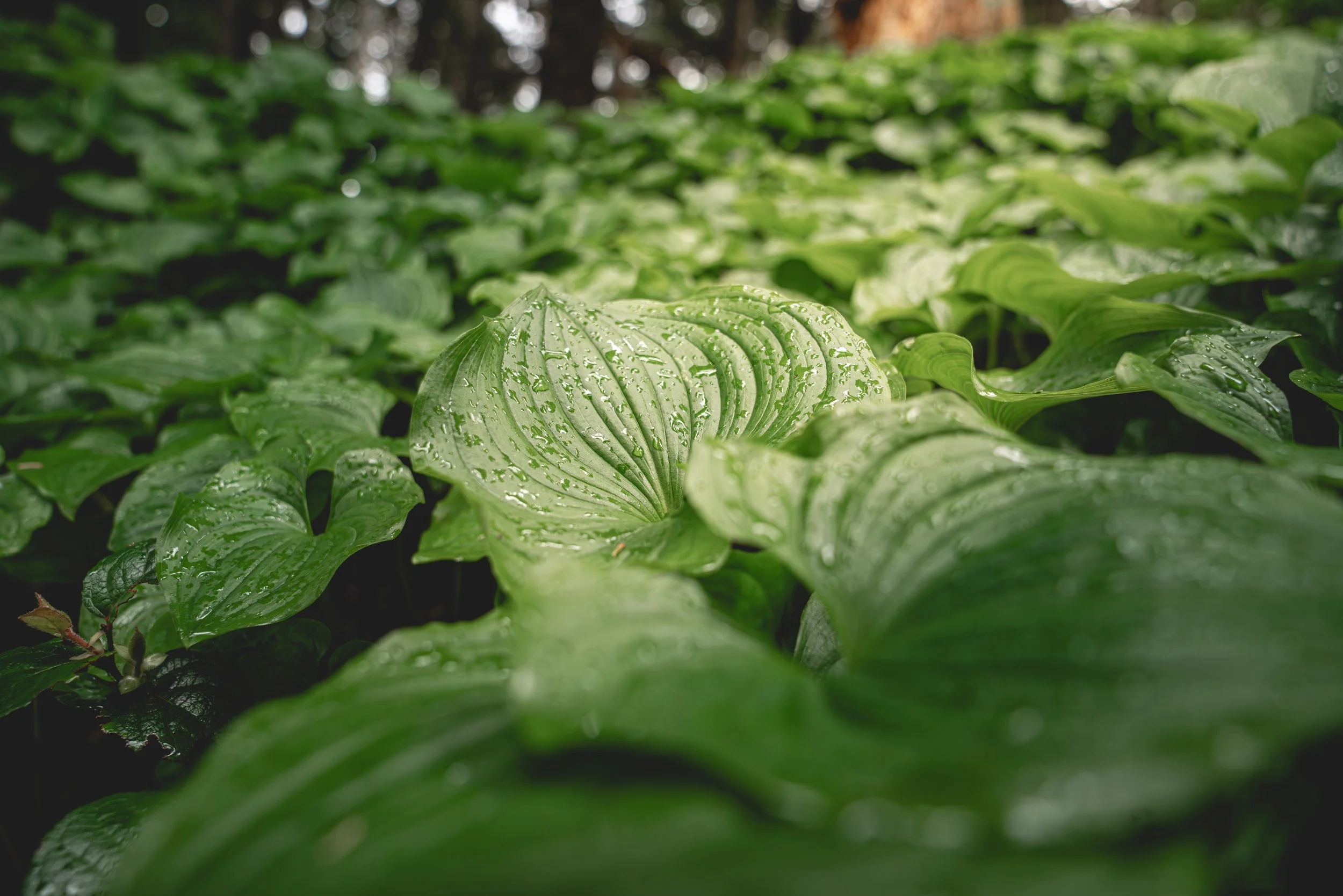
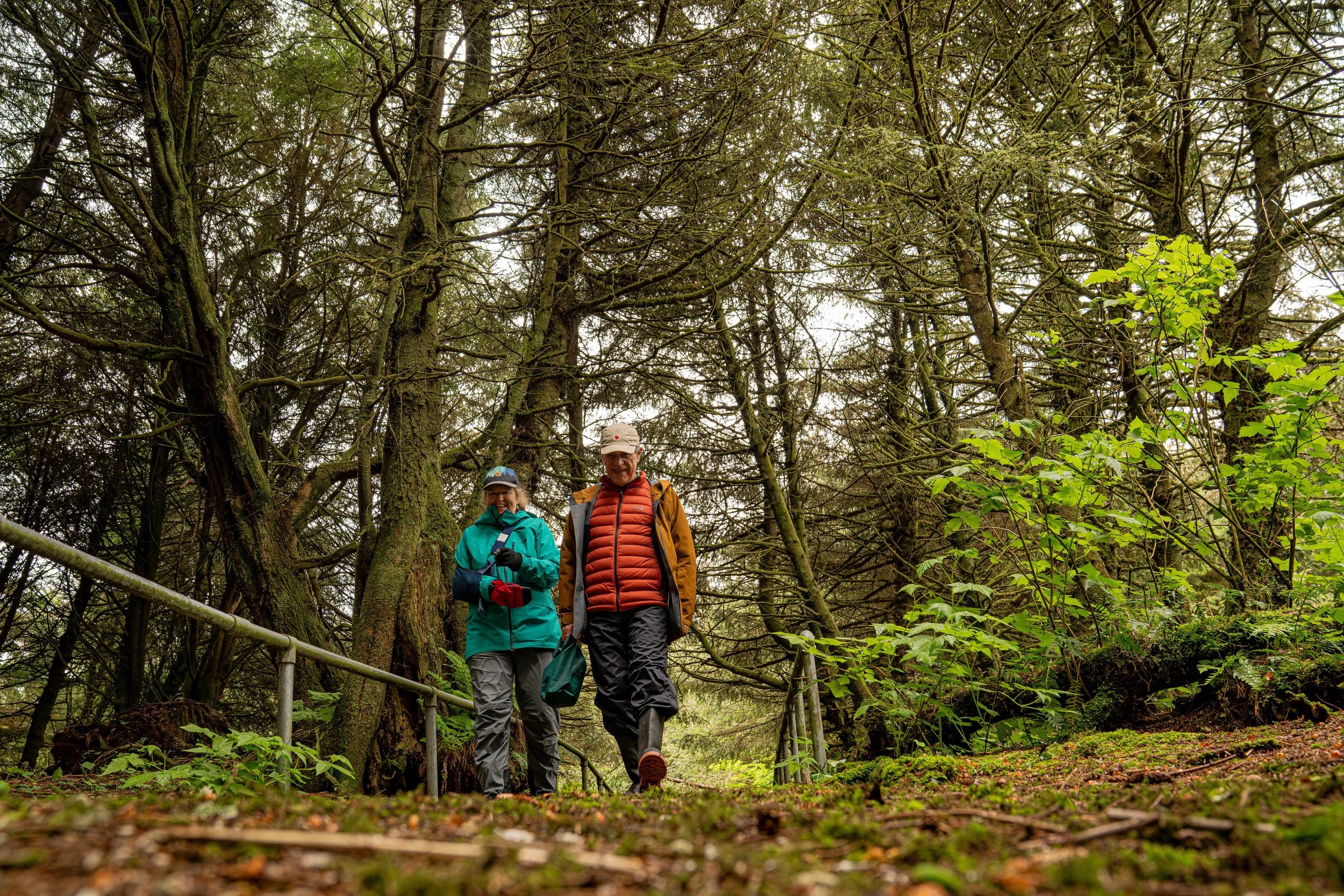
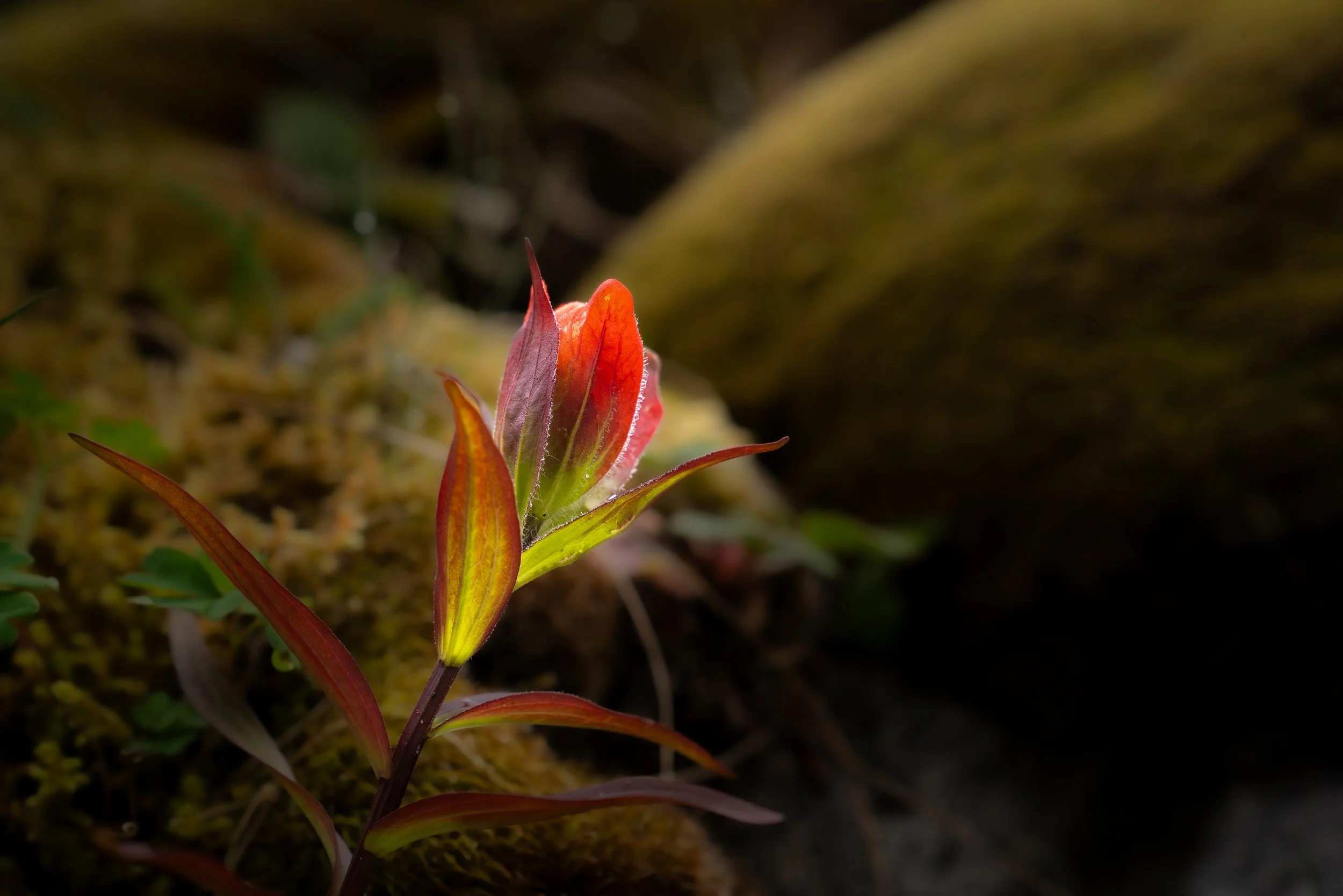
From there, we wandered into the rainforest itself. One of the joys of photography in the Great Bear Rainforest is learning to look beyond the obvious. Tiny fungi, patterns in moss, twisted roots, filtered light through cedar and spruce. All of this together tells the story of this ecosystem. Some guests focused on macro details while others worked to capture the scale and atmosphere of the forest as a whole.
That evening we anchored at Qlawdzeet, where several guests headed out for an evening kayak beneath calm skies and glassy reflections.
Whales, Sea Lions & Intertidal Wonders
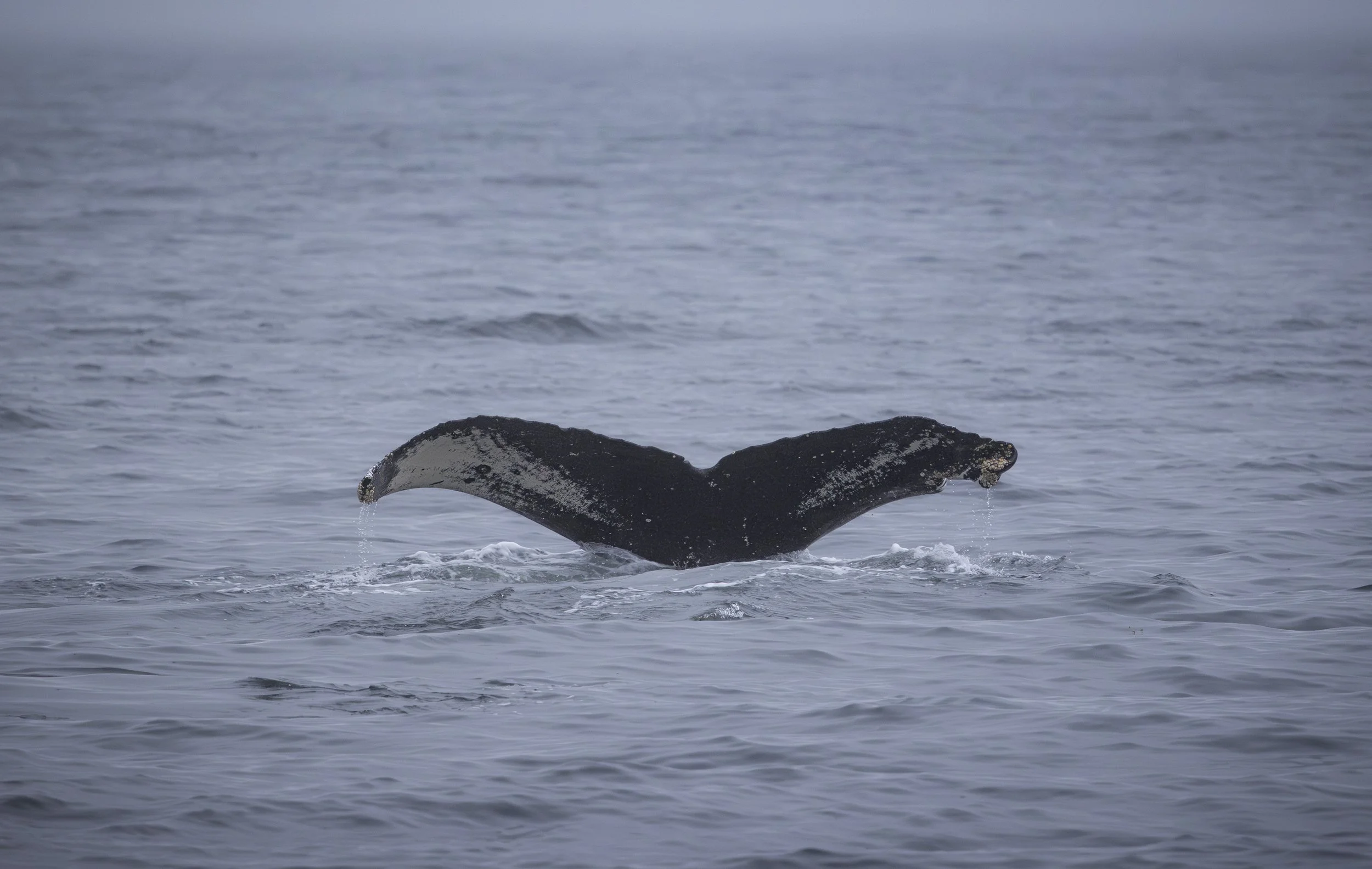
Day two started almost immediately with wildlife: a humpback whale surfaced not far from the boat shortly after lifting anchor. Rather than rushing the encounter, we spent time learning the behaviour patterns of this individual. Watching its breathing intervals, anticipating movement, and positioning ourselves carefully for photography.
Patience paid off.
Eventually the whale lifted its tail high above the water at the perfect angle from where we were standing, allowing many aboard to capture the classic fluke image photographers dream of. The identification photo has since been uploaded to Happywhale, contributing to ongoing humpback whale research and monitoring efforts along the Pacific coast.
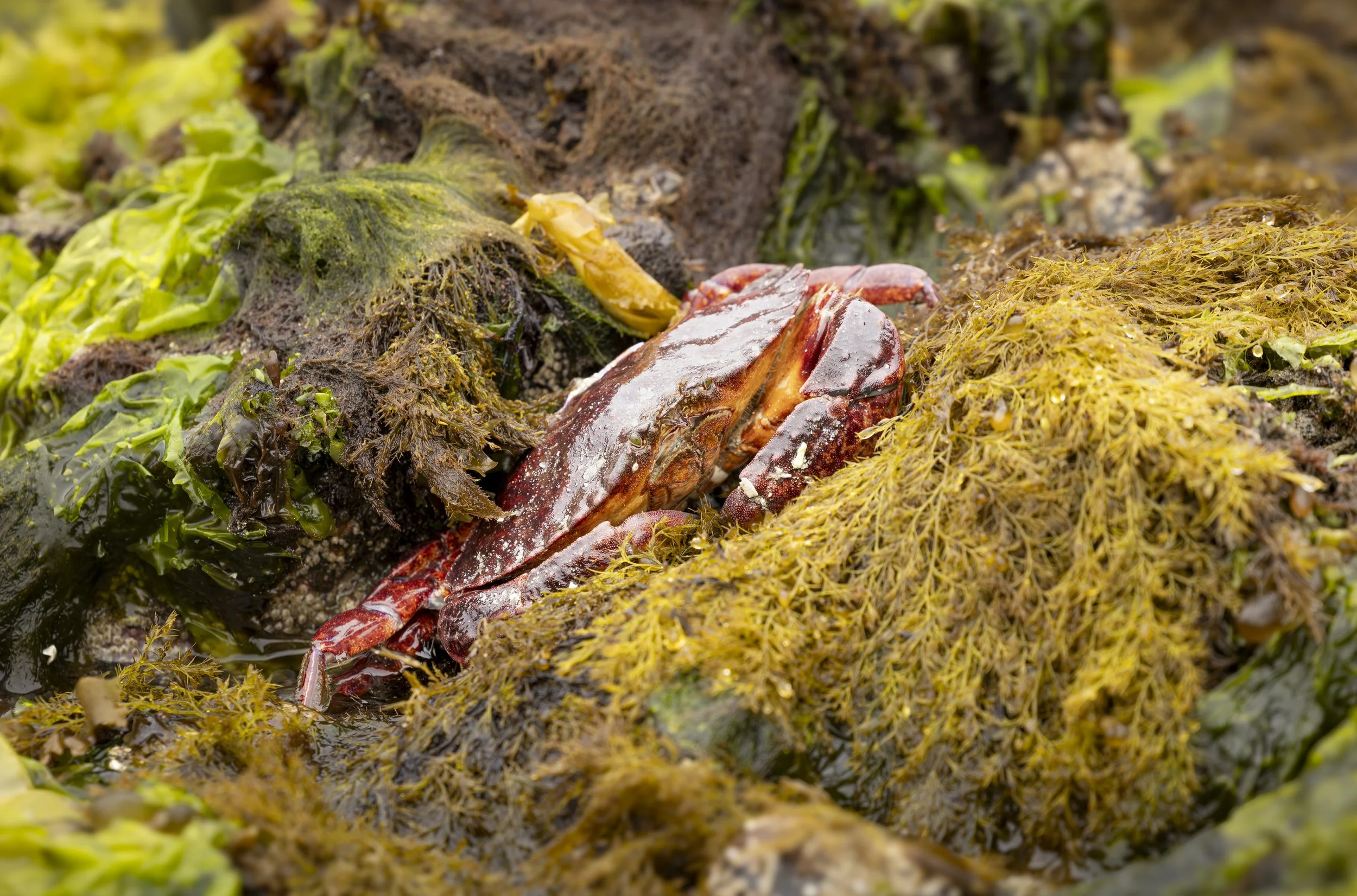
Later in the day we explored one of the richest intertidal zones of the trip. Purple urchins, huge sea cucumbers, shore crabs, snails, chitons, and countless other organisms revealed just how alive this coastline is. It was one of those places where every rock held something new to discover.
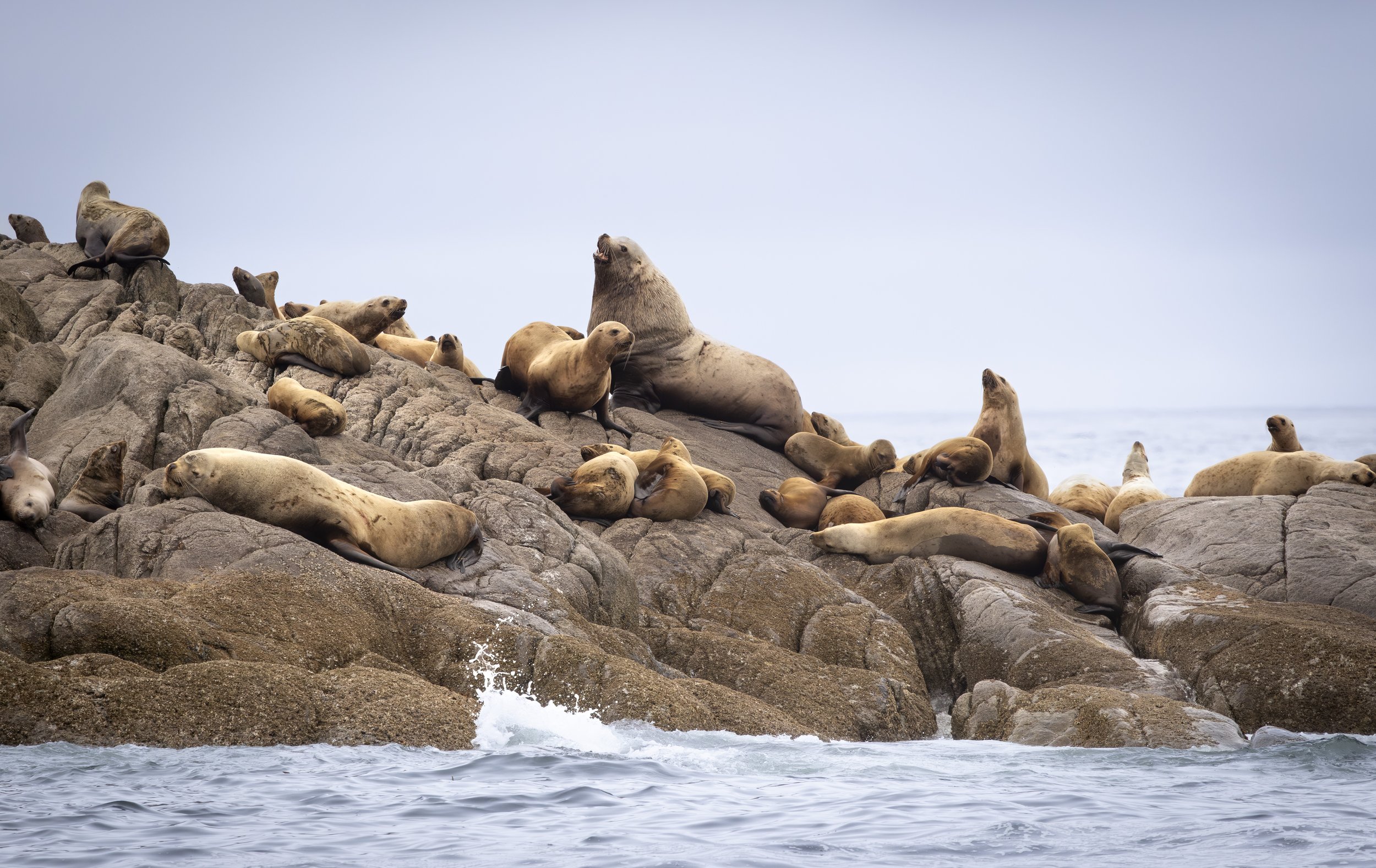
The afternoon brought us to a non-breeding Steller sea lion haul-out. Photographing from the sailboat allowed us to observe natural behaviour without disturbance as massive sea lions sprawled across wave-washed rocks while surf exploded around them. For photographers, the challenge became balancing motion and stillness: freezing crashing waves while keeping enough softness to convey the energy of the coast.
We finished the day wandering through another island meadow bursting with wildflowers, cameras constantly shifting between sweeping landscapes and tiny floral details.
Preparing for Bears
Our third morning began quietly with another kayak session and a special wildlife sighting: a mink making its way towards the shoreline, stopping to pose on different small rocky islands on the way.
Later that day we visited another white sand beach where guests participated in a shoreline clean-up, a small but meaningful way to give back to these places we spend so much time appreciating and photographing.
As we edged closer to grizzly bear country, the focus of the trip shifted toward bear biology, behaviour, and ethical wildlife viewing. Before entering the estuaries, we spent time discussing how to read bear behaviour, how tides influence feeding opportunities, and how photographers can anticipate movement without influencing the animals themselves.
Understanding behaviour is one of the most important tools in wildlife photography. A photograph becomes far more meaningful when you can recognize what an animal is doing and why.
That evening we entered the Kwinamass estuary for our first bear-focused outing. We were fortunate enough to glimpse a grizzly bear, though the bear clearly wasn’t interested in spending time near us. Respecting that decision, we quietly moved on always prioritizeing the animal’s comfort over the photograph.
Entering the Khutzeymateen
Day four brought our first official journey into the Khutzeymateen Inlet, one of the most important protected grizzly bear habitats on the coast.
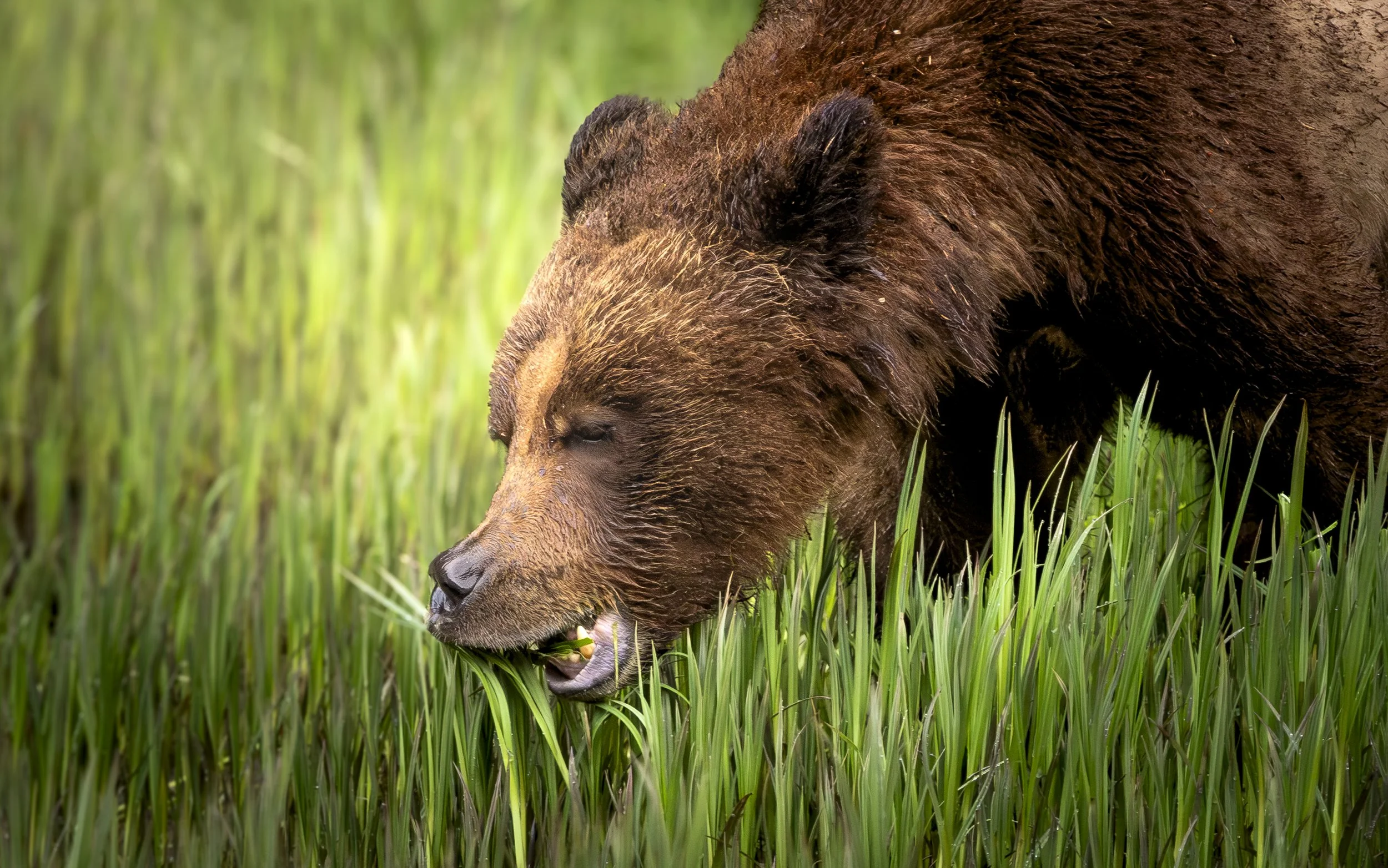
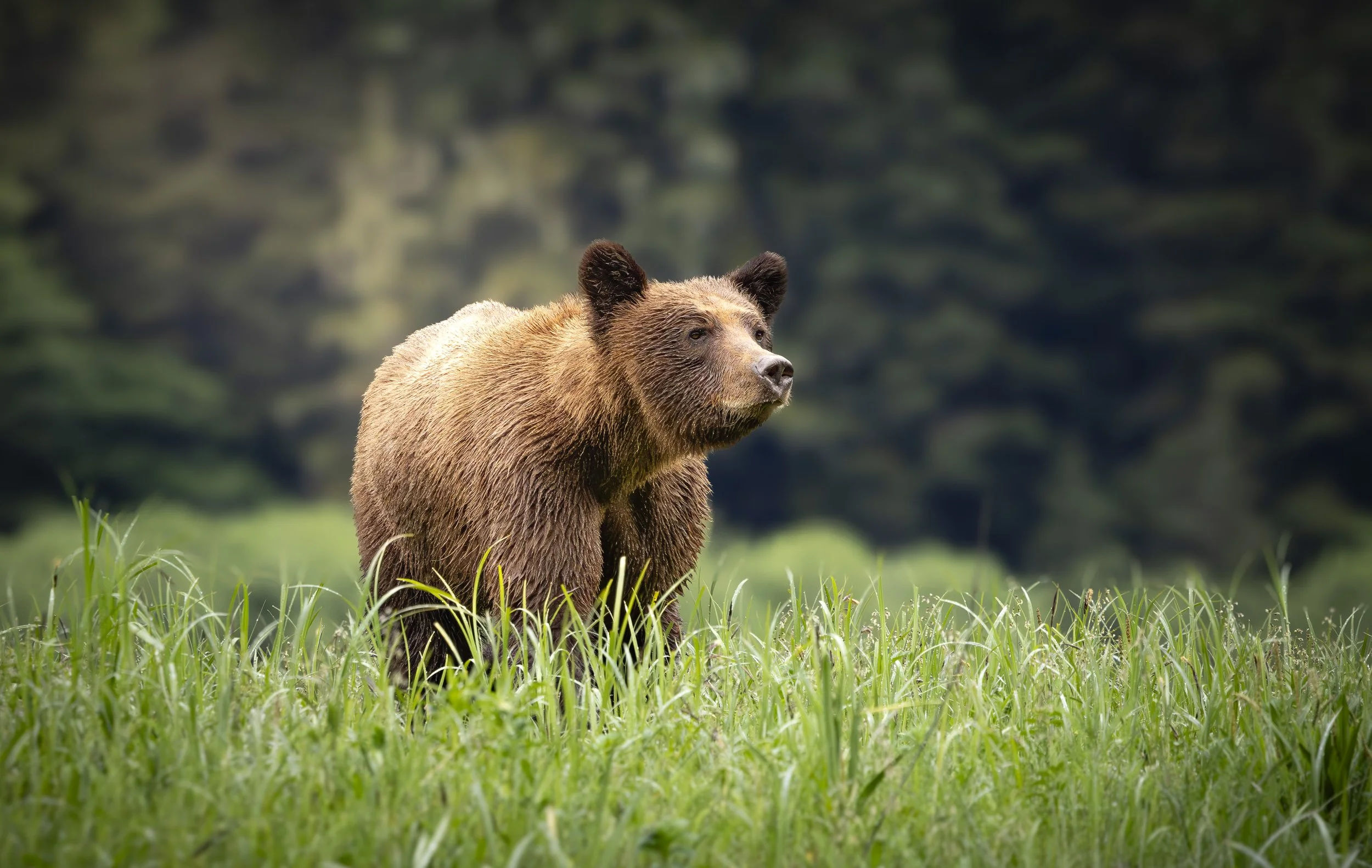
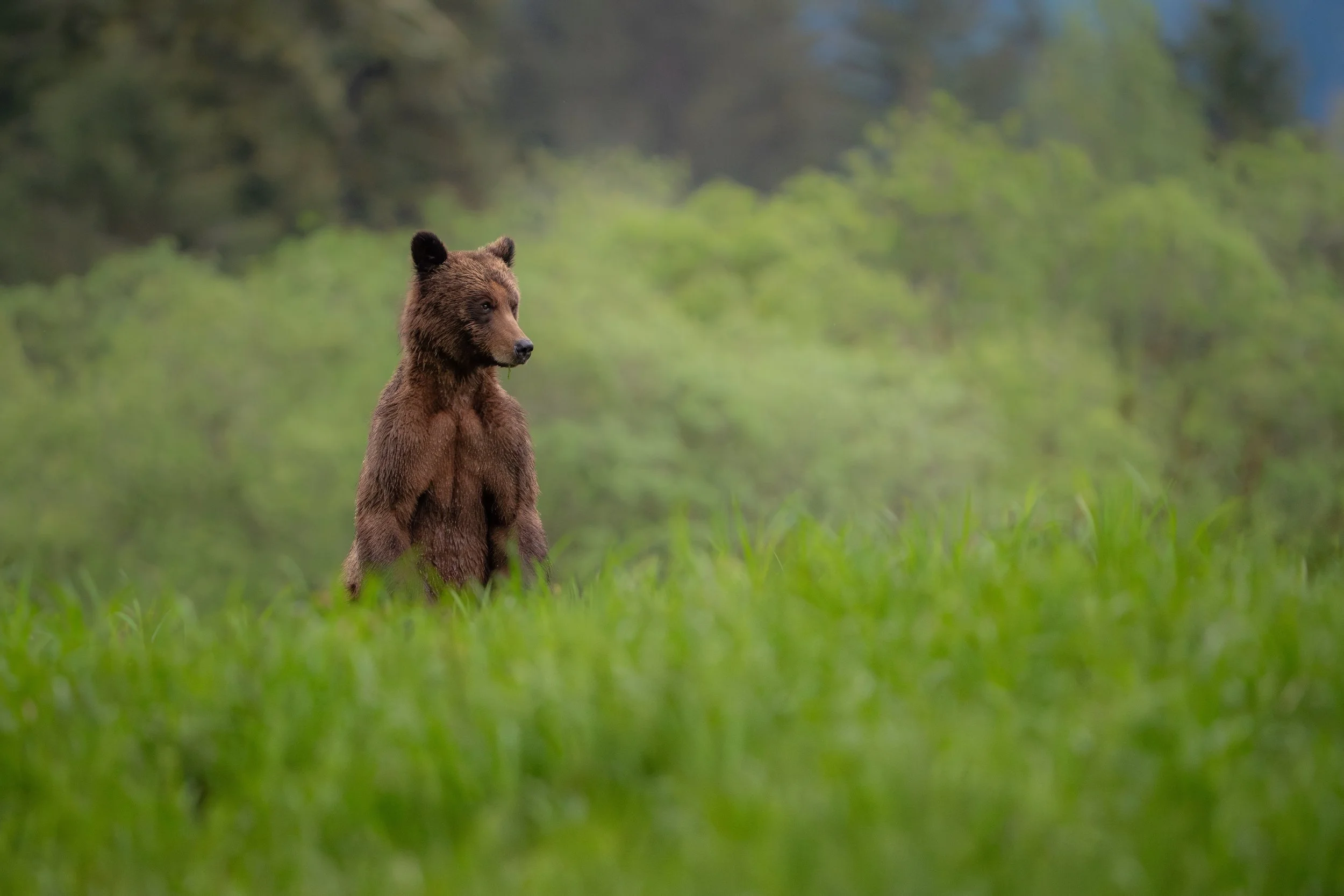
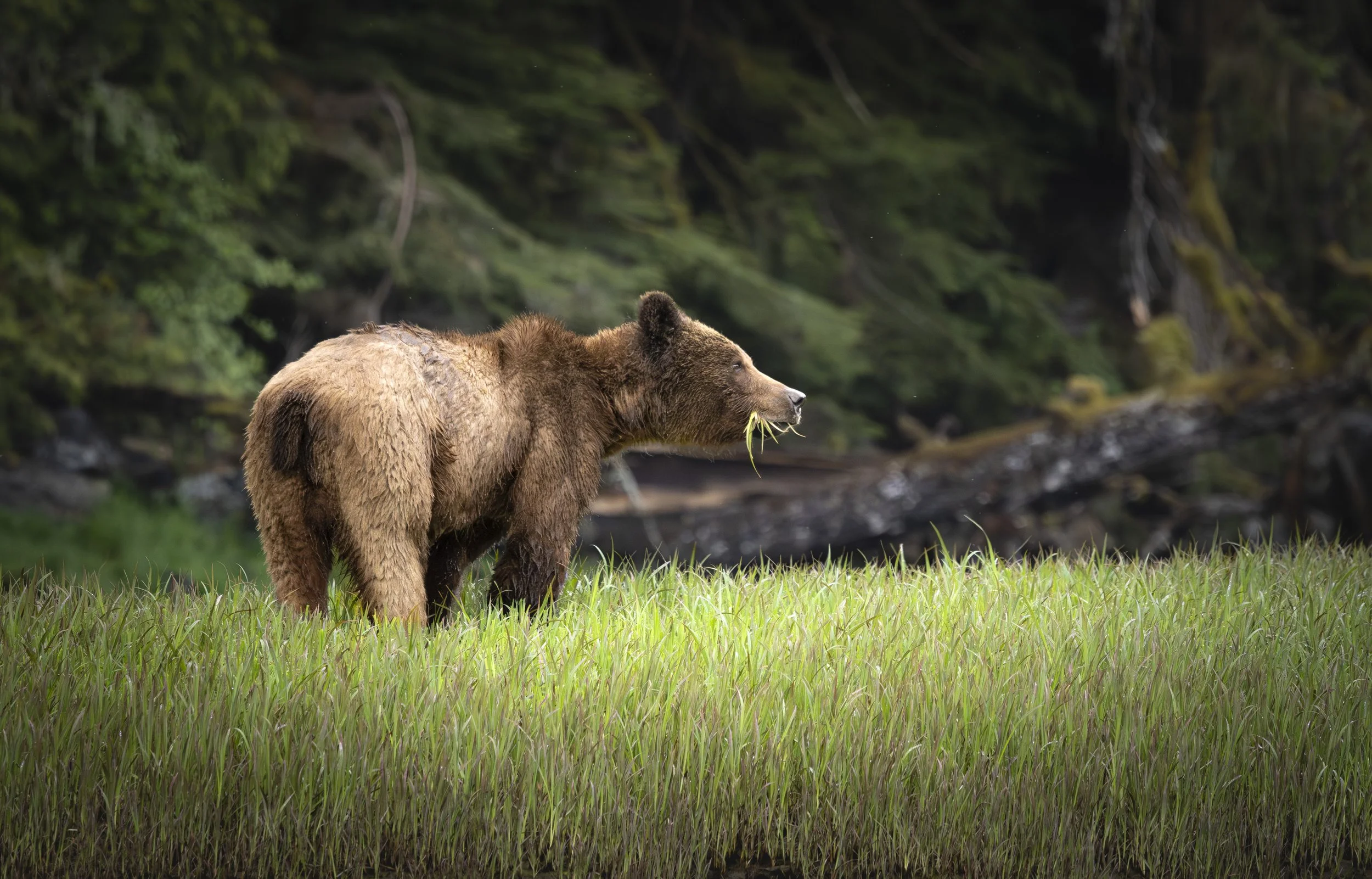
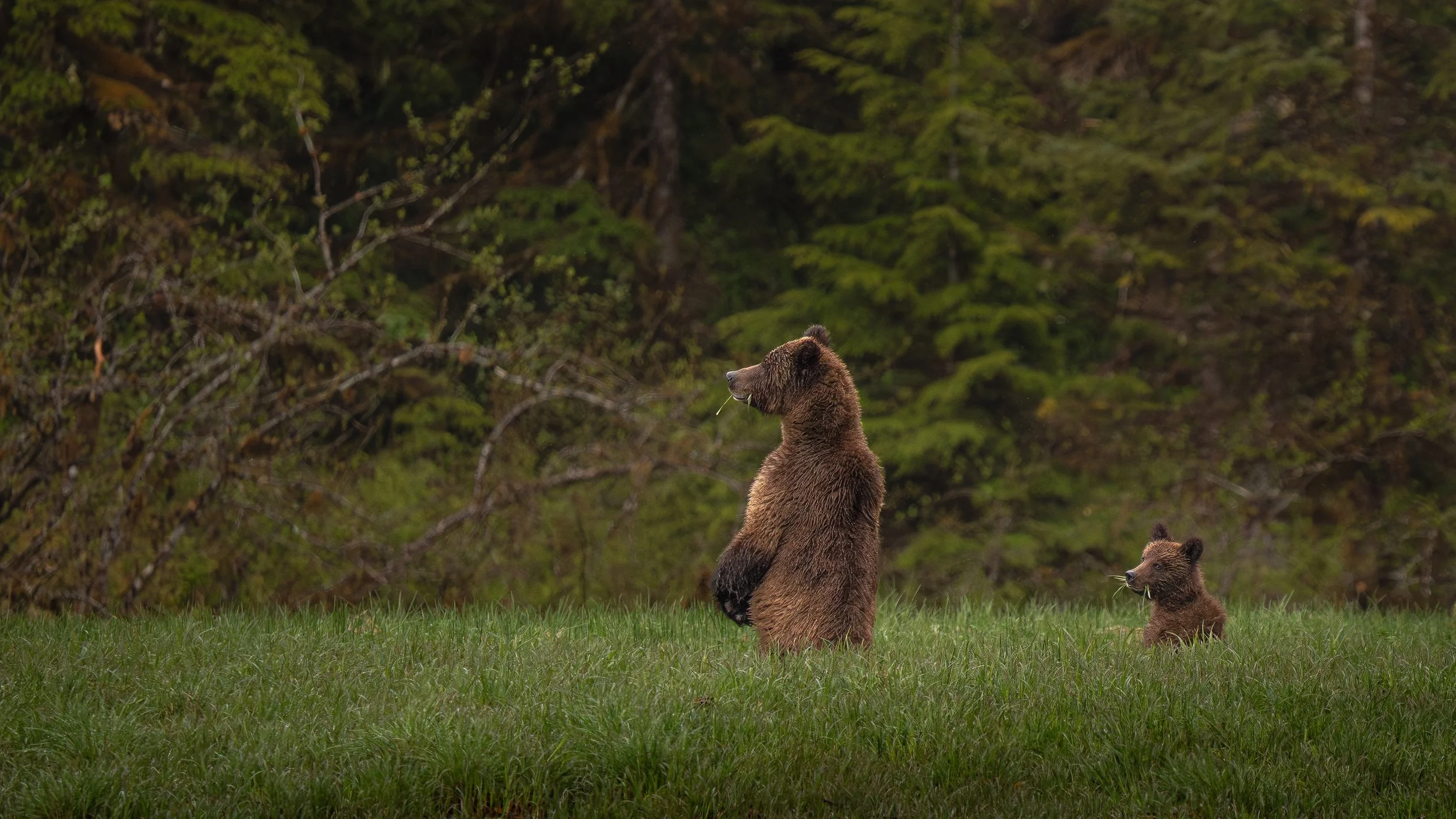
It didn’t take long before we had our first unforgettable sighting: a mother grizzly and cub grazing on sedge flats and digging for clams along the shoreline. Watching bears feed in estuaries is a powerful reminder of how interconnected coastal ecosystems truly are. Nutrient-rich tidal zones support sedges and shellfish, which in turn support bears emerging from hibernation and rebuilding energy reserves.
For photographers, the soft overcast conditions created beautiful opportunities. Gentle contrast, rich colour, and clean detail in the bears’ fur and surrounding landscape.
Further into the inlet we visited the ranger station and met Norm and Gloria, guardians of the Khutzeymateen. Their work includes monitoring bear activity, managing visitor permits, educating guests, and helping ensure this extraordinary place remains protected for future generations.
Life in the Estuary
Over the next several days we entered the estuary four separate times, timing our visits carefully around tides and the best available light (we picked these sailing dates for a reason!). Every session was entirely different.
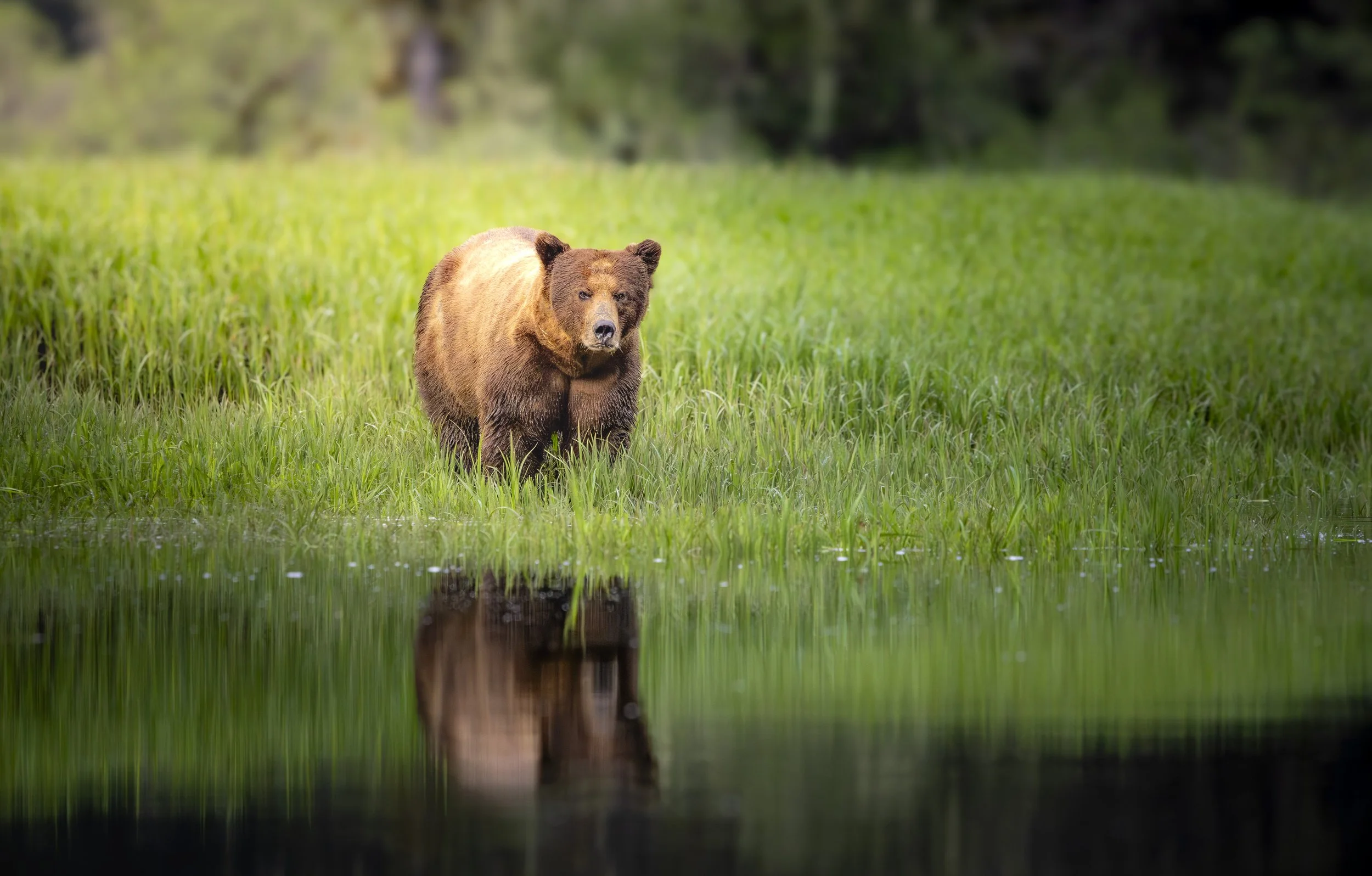
Some outings were peaceful and intimate: solitary bears grazing quietly on sedge meadows while mist drifted through the valley. We witnessed what appeared to be early mating behaviour between a male and female grizzly. The male watched the female from across a slough before eventually crossing over and disappearing with her into the forest. While other sessions carried tension and drama, including one memorable encounter involving a large dominant male whose arrival immediately changed the behaviour of every other bear nearby. Each session required patience as we waited for behaviours to unfold and the estuary to come alive with the ebb and flow of the tides.
And somehow, the weather seemed perfectly timed for us all week. The rainforest delivered its signature atmosphere: low clouds, drifting mist, and rain that added mood and depth to the landscape. Yet almost every time we boarded the zodiacs, conditions softened. Winds eased, rain lightened, and the estuary opened itself to us.
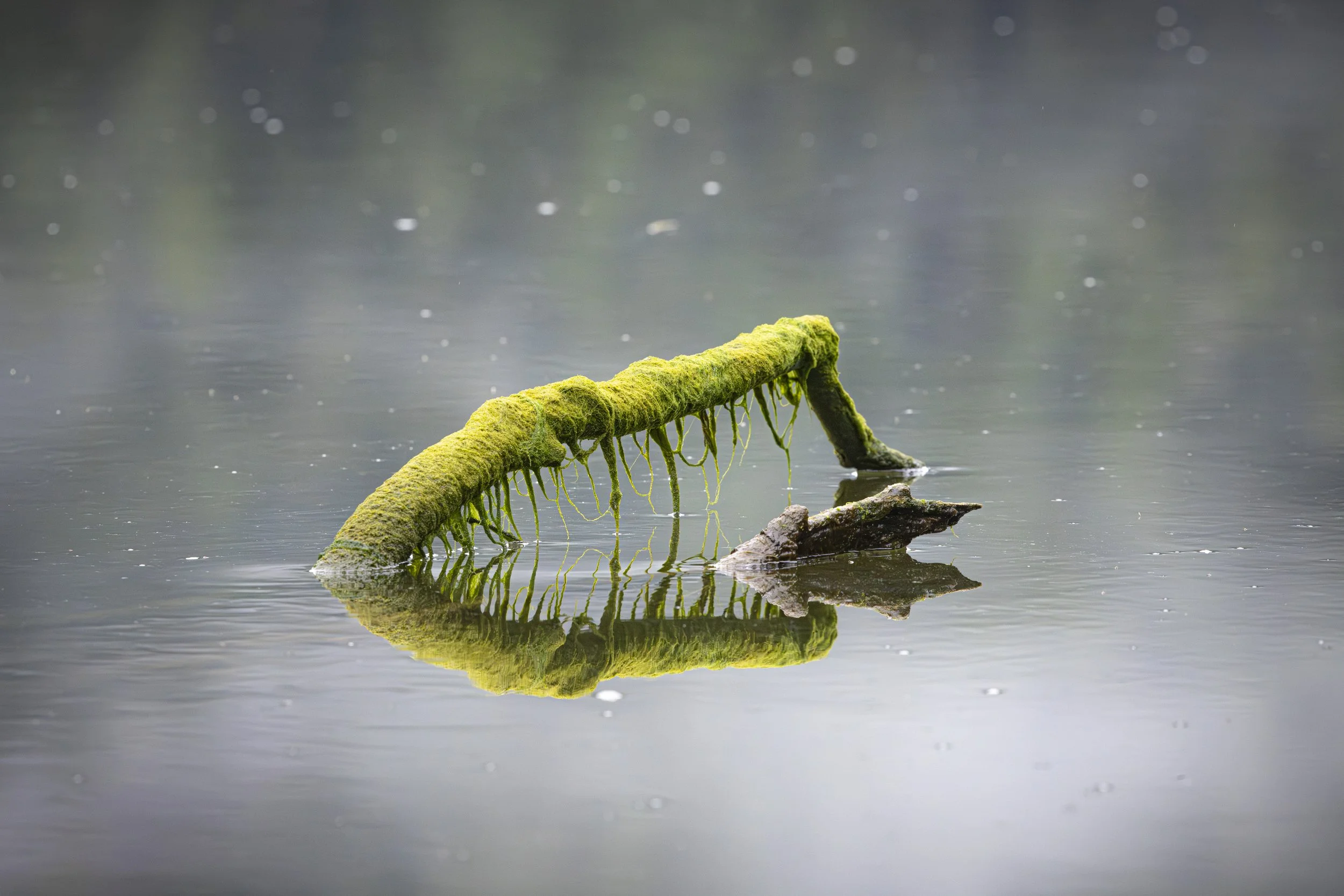
For photographers, these are dream conditions. Soft light, reflective water, layered mountains, and moody skies combined to create images that felt every bit as wild as the place itself.
The Journey Home
After our final estuary session on day six, we slowly made our way out of the Khutzeymateen under clearing skies and spreading sunshine.
Back among the outer islands, we enjoyed one final evening kayak in calm conditions before gathering for a farewell dinner, slideshow, and photography wrap-up. One of the most rewarding parts of any expedition is seeing how differently each guest interpreted the same moments. From dramatic wildlife action to intimate details of rainforest textures and quiet landscapes.
By our final morning, the boat was filled with tired smiles, full memory cards, and the shared feeling that we had experienced something genuinely special together.
We returned to Prince Rupert under blue skies, a group of happy humans carrying home photographs, stories, and memories from one of the wildest corners of the British Columbia coast.